
Let's talk about the real friction
It's not the vibrator that's the problem. It's the fear underneath it. Your partner might be worried that introducing a lemon clitoral vibrator means they're not enough, that you're pulling away emotionally, or that they're suddenly supposed to "learn" something new. These are real concerns, and they deserve to be named before you even open the toy box.
Here's what I know from working with couples through this exact transition: hesitation isn't rejection. It's usually just unfamiliarity wrapped up in a little bit of shame around not knowing what to do with it. And that's completely fixable.
Why partners get nervous about toys
Most people grow up thinking pleasure is something that happens between two people only. A third player, especially one that's mechanical, can feel like an intruder. Your partner might be worried that:
- You're bored, which feels like a referendum on them
- They'll mess it up or hurt you
- Using it together means something has broken in your sex life
- They'll be replaced or become less relevant
- It's somehow "cheating" or crossing a line they didn't agree to
None of these are true. But they're loud enough that they need air time. You can't move past them by ignoring them. You have to acknowledge that these feelings exist, that they're not irrational, and that you're not trying to steamroll your partner into something they're uncomfortable with.
The conversation that actually works
Don't start with the toy. Start with the desire.
Something like: "I've been thinking about foreplay and what we could explore together. I'd like to feel more pleasure in our time together, and I think there's something that could help us both have more fun." Notice the partnership language. It's not "I want this," it's "we could explore."
Then be specific. Don't say "I want to use a vibrator." Say something like: "I've read about lemon clitoral vibrators, and I'm curious what they feel like together. Would you be open to trying it with me?" This shifts the frame from "you need to do something" to "let's discover this together."
Give them time to sit with it. Don't expect an answer in the moment. If they say no, ask what's underneath that no. Is it discomfort with the idea? Fear they'll lose control? Concern about noise or time?
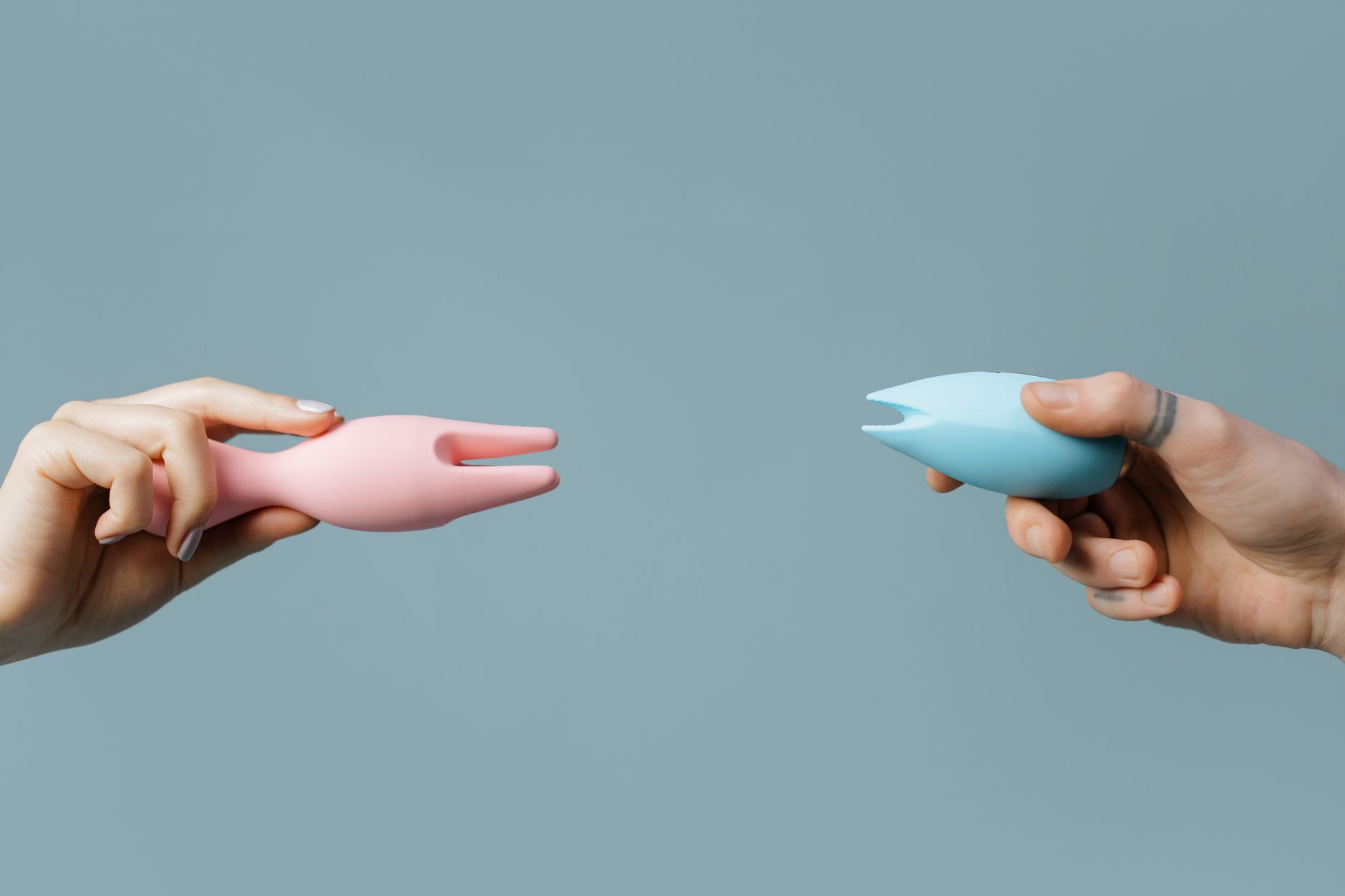
Photo by cottonbro studio on Pexels
How to introduce it without pressure
When they say yes, here's the rhythm that works:
Start with education, not performance. Show them how the lemon vibrator works. Let them hold it, feel the weight, hear the sound. This removes the mystery. A lemon clitoral vibrator isn't a secret. It's a tool with a clear purpose, and demystifying it takes the shame out of the room.
Make your first experience exploratory, not goal-oriented. This is huge. Many couples bring vibrators into sex expecting fireworks. Instead, frame it as: "Let's just play with this and see what happens. No pressure to come. No pressure to perform. We're just being curious."
Let your partner lead the introduction. Suggest they be the one holding it, controlling the speed and rhythm. This gives them agency. They're not watching you disappear into sensation. They're creating the sensation. They're present and involved. This is the opposite of replacement. This is partnership.
Use it as foreplay, not the main event. Many hesitant partners relax when they realize the lemon vibrator is an add-on to what you already do together, not a replacement. You're still kissing, still touching, still talking to each other. The vibrator is just another layer of stimulation.
What to expect the first time
Your partner might feel awkward. They might worry they're doing it wrong. They might get tired or frustrated. This is all normal. You might not orgasm. That's also fine.
What matters is that you stay connected. Keep talking. Tell them what feels good. Ask them questions. "Does this angle feel right to you?" "Do you want to try a different pattern?" This isn't just practical. It's intimate. You're learning together.
If it goes badly, that's also data. Some couples need multiple attempts before the hesitation softens. Some realize they need privacy, or more time warming up, or to read the instructions together first. All of this is valuable information, not failure.
The ongoing conversation
After you use it, don't pretend it didn't happen. Talk about it. "That felt different for me. What did you notice?" "Does this feel like something we'd want to try again?" This normalizes vibrators as part of your shared pleasure, not a taboo topic you never mention.
When hesitation lingers, sometimes what helps is knowing that other couples use them. Framing it as normal, not weird, can ease the psychological friction. You might read something together about lemon clitoral vibrators or watch educational content as a couple. This removes the isolation and shame.
When hesitation points to something deeper
Sometimes resistance to toys isn't really about toys. It's about feeling disconnected emotionally, or about one partner feeling more valued than the other. If your partner says "I don't want to use vibrators," but what they mean is "I feel like you're not present with me," then a lemon vibrator won't fix that. The conversation needs to go deeper.
This is when you might benefit from talking to a couples therapist. Not because there's anything wrong with you. But because hesitation can be a signal that other things need tending to first. Sometimes intimacy needs to rebuild before introducing new tools.
Making it feel natural, not clinical
The most successful introductions I've seen happen when couples make space for lightness. You can laugh. You can be awkward. You can stop and try again later. You don't have to be serious about pleasure. In fact, a little playfulness often makes the whole thing easier.
Text them during the day: "I've been thinking about trying that thing together." Let anticipation build. Make it something you're both looking forward to, not something that happens by accident after too much wine and no conversation.
The long view
If your partner comes around, great. You've expanded your pleasure together, and you've shown your partner that intimacy can evolve. If they stay hesitant, that's information too. Some people genuinely prefer sex without toys, and that's valid. The point isn't to force someone into something. The point is to check in with each other, stay curious, and keep talking about what you both want.
What I've learned from years of working with couples is that hesitation usually means something needs communicating. Once that thing is said out loud, once you've both acknowledged the fear underneath the "no," the actual decision becomes much easier. Whether you use lemon vibrators or not becomes secondary to the fact that you showed up for each other, asked hard questions, and didn't hide.
People also ask
How do I know if my partner will ever be open to using vibrators?
There's no way to know without asking. But hesitation isn't the same as a permanent no. People change their minds when they feel safe, informed, and like they have a choice. If you've had the conversation, given them space to sit with it, and haven't pressured them, you've created the conditions for openness. Some partners need months. Some need to see that other couples do this. Some need to read about it from a credible source. There's no timeline, but there is a path.
What if my partner says they'll try it just to make me happy?
That's a no dressed up as a yes, and it won't feel good for either of you. A genuine yes comes with curiosity or willingness, not resentment. If your partner is agreeing out of obligation, pause. Go back to the conversation. Ask what they're actually feeling. You want them in because they want to be there too, not because they feel pressured.
Can I use a lemon vibrator by myself if my partner won't?
Absolutely. Your pleasure doesn't depend on your partner's comfort with tools. Solo exploration is valid and often helps you understand your own body better. Sometimes partners become more open when they see you enjoying yourself without shame. Sometimes they don't. Either way, your pleasure is yours to pursue.
How do I bring it up again if they said no the first time?
Don't push. But you can revisit it once every few months if you genuinely think something has shifted. You might say: "I know you weren't sure about vibrators before. I'm still curious. Would you be open to talking about it again?" But only if you mean it and you're truly okay with another no. If you keep asking after they've said no multiple times, it stops being exploration and starts feeling like pressure.
What if we use a vibrator and it actually makes things awkward?
Stop. Talk about what made it awkward. Was it the tool itself? The lack of communication during? Too much pressure to perform? The noise? The pressure to orgasm? Once you know what the friction is, you can adjust. Maybe you need more foreplay first. Maybe you need to laugh about it and try again in a month. Maybe you learn that vibrators just aren't for you as a couple. All of this is useful information.
How do I make sure my partner feels included, not replaced?
Talk during. Keep touching them. Keep eye contact when you can. Let them control the vibrator. Ask their opinion on sensation. Make it collaborative, not a solo act they're watching. And afterward, be affectionate in a way that has nothing to do with sex. Show them that you still want them, still crave their touch, still value what you do together.
The permission you need
Hesitation in your relationship doesn't mean something is broken. It means you're negotiating something new, and that takes conversation. You're allowed to want more pleasure. Your partner is allowed to be nervous about how to give it. Both things can be true. The lemon vibrator is just the object. The real work is talking, listening, and deciding together what intimacy looks like for your specific relationship.
You don't need permission to ask. You don't need your partner's instant enthusiasm to explore. What you do need is honesty, patience, and a commitment to staying connected even when the answer is no. That's what makes foreplay work, with or without tools.