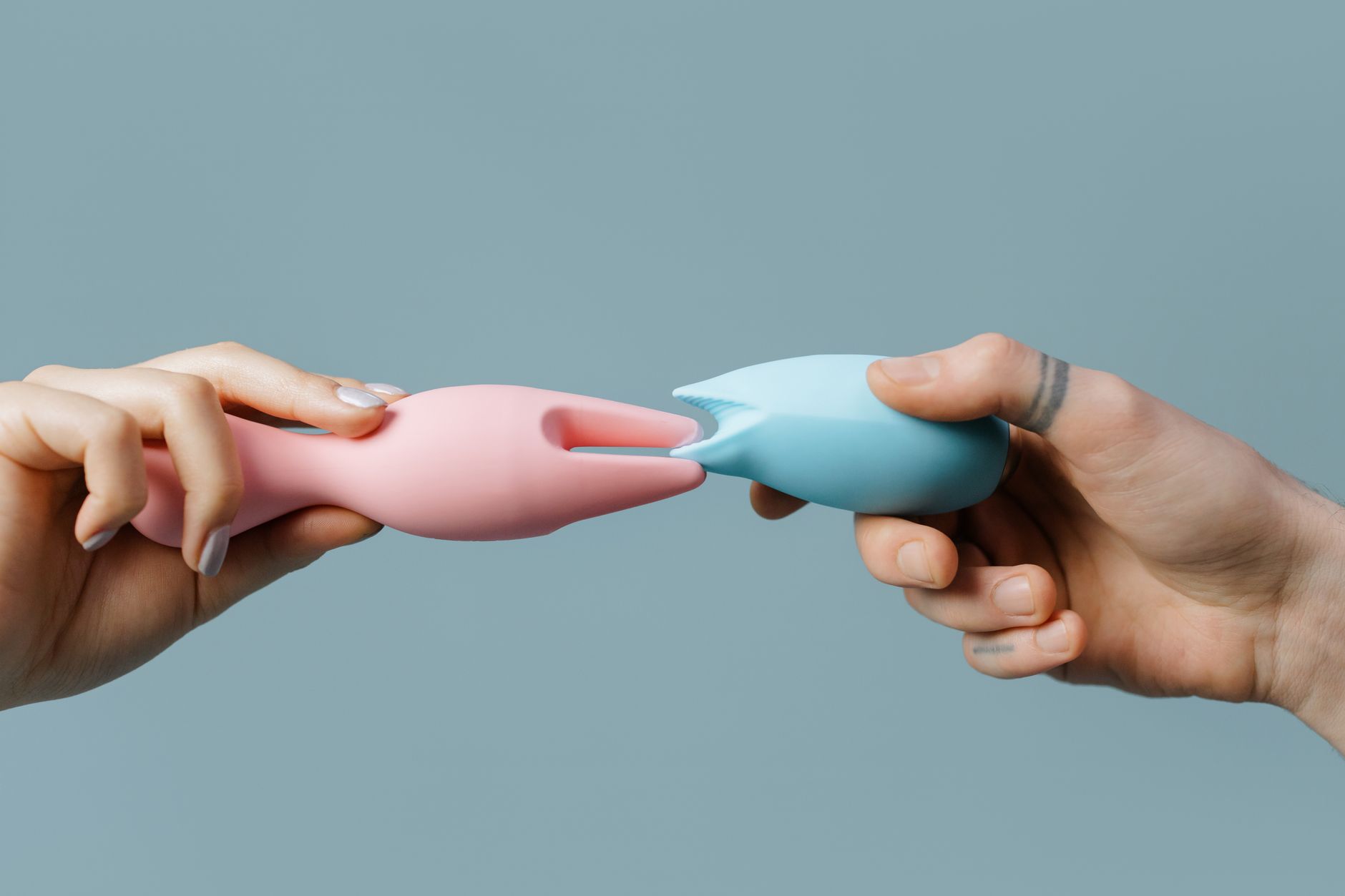
Let's talk about the arousal curve nobody mentions
Here's what I hear from clients constantly. "I used to get turned on in thirty seconds. Now it takes me twenty minutes just to feel interested." The panic that follows is understandable. There's this cultural myth that real desire should arrive like a lightning bolt, fully formed and urgent. Anything slower gets labeled as broken.
It isn't. Slow arousal is actually incredibly common, especially in long-term relationships and across different life stages. And here's the thing nobody tells you: lemon vibrators, with their particular approach to stimulation, are brilliant for people whose libido needs runway.
Why slow arousal isn't a problem it's a timeline
Your body's arousal system works in layers. First comes psychological interest (you think about sex). Then comes physical response (blood flow, lubrication, sensitivity). Then comes the intensity that makes orgasm likely. Most people assume these should stack instantly. They don't always, and that's not a flaw.
In long-term relationships, you're working against habituation. Your nervous system has been exposed to the same person, the same bedroom, the same sequence of events. It needs novelty or deeper intentionality to dial in. Stress, work demands, parenting, health changes all add friction. Your body isn't saying no. It's saying "I need more time."
The clinical term is "responsive desire" versus "spontaneous desire." You're not broken if you live in the responsive camp. You're actually in good company. Many people need external input, a specific touch, or a dedicated window to feel arousal building.
Lemon vibrators solve this beautifully. The suction mechanism works differently from traditional vibration. Instead of waiting for your body to generate its own response, a lemon sucker jumpstarts the process. It's not forcing anything. It's giving your nervous system a signal your body can actually work with.
The mechanics of suction when arousal is slow
When arousal is gradual, direct friction can feel annoying. You haven't built enough sensation yet to make rubbing pleasurable. Suction is different. It creates a rhythmic stimulation that feels more like something your body is being drawn into, rather than something happening to you.
With a lemon vibrator, you start low. Pattern one feels almost gentle. Your body has permission to respond without pressure. There's no performance component. You're not waiting to "be ready enough" for penetration or for your partner. You're just introducing sensation and watching what happens.
The suction patterns available on devices like the Lem allow your arousal to unfold in stages. You might spend five minutes on a lower setting while your body wakes up, then graduate to a faster pattern once you feel the shift. This pacing mirrors how responsive desire actually works. You're not skipping steps. You're honoring them.
Many people find that the warmth of the suction also helps. It's a sensation that feels closer to touch than vibration does. Your nervous system may interpret it as more intimate, more connected. That matters when you're trying to shake off the day's stress and actually arrive in your body.
Building desire as a couple when arousal is slow
If you're partnered, slow arousal can become a relational issue if you're not intentional about it. One partner might still have quick-to-arrive desire while the other needs more runway. The resentment builds quietly. "Why do I always have to wait?" meets "Why do I always have to rush?"
A lemon vibrator changes this dynamic. It becomes a tool you use together, not a substitute for your partner. You might use it during foreplay. You might use it solo first, then invite them in once your arousal is visible. You might use it while they touch you elsewhere. The point is you're creating a shared process that acknowledges your actual timeline instead of fighting it.
Talk about this beforehand. "I know I need about fifteen minutes to feel interested. Can we plan sex for a time when we're not stressed? And would you be open to me using the lemon to get started?" That conversation does three things. It removes shame from your slower timeline. It gives your partner something to do besides wait. And it makes the whole experience less transactional.
When arousal has space to build intentionally, the sex that follows is often deeper. You're not rushing through stages. You're actually present in each one.
Timing, setting, and the unglamorous truth about slow desire
Here's what I rarely see written about: slow arousal often needs logistics. You can't be thinking about laundry, your to-do list, or whether the kids are asleep. Your brain needs to be somewhere else first.
That might mean scheduling sex. I know, it sounds utterly unromantic. But for many people, it's the difference between desire building or never arriving at all. You set aside the time. You get the distractions out of the way. Then you have actual space for arousal.
The setting matters too. Temperature, lighting, music if you use it. These aren't luxuries. They're inputs your nervous system needs to relax enough for desire to arrive. A cold bedroom means your body is using energy to regulate temperature instead of experiencing sensation.
When you use a lemon vibrator in a space you've actually prepared, with time you've actually protected, the whole experience shifts. Your body isn't trying to generate arousal against resistance. It's responding to an environment that's actually conducive to pleasure.
Solo practice when arousal feels elusive
One of the most valuable things you can do if slow arousal is your pattern: get to know your own arousal alone first. No performance pressure. No timeline negotiations with a partner.
Use your lemon vibrator in a comfortable space with no interruptions. Start with the lowest setting. Notice what happens in your body. Does your breathing shift? Do you feel warmth? Does your mind go somewhere? These micro-signals tell you where your arousal lives and how it actually builds for you personally.
Many people discover through solo use that they have arousal, it just has a particular shape. Maybe it's visual. Maybe it's auditory. Maybe you need to feel a certain way emotionally first. Once you know your own pattern, partnered sex becomes about communicating that knowledge instead of trying to figure it out in the moment.
You might also find that using a lemon vibrator solo helps you understand your body's response time more honestly. "Oh, it takes me about eight minutes to feel my clitoris fully engorged." That's data. That's useful. That's not failure.
Separating medical from relational from just regular slow
If arousal has suddenly disappeared where it used to exist, that's worth discussing with a healthcare provider. Hormonal shifts, medication side effects, or underlying health issues can genuinely suppress desire. That's different from your baseline being slow.
But if this is just how you've always been, or how you've become after years with the same partner, you're not dealing with a medical issue. You're dealing with normal human sexuality. Lemon vibrators address that directly.
One distinction worth noting: if you're experiencing pain during arousal or sex, that's also separate from slow arousal. Slow just means it takes time. Pain means something is wrong and needs attention. Don't conflate the two.
For most people with truly responsive desire, the issue isn't that something is broken. It's that you've been told your timeline is wrong. Using a lemon sucker gives you permission to claim your actual arousal pattern as valid.
The mental part nobody talks about
Slow arousal has a huge mental component. If you're worried you're taking too long, you're using mental energy on anxiety instead of on sensation. The lemon vibrator helps by giving you something external to focus on. You're not performing. You're not forcing. You're just responding to the input.
That shift takes pressure off. Your nervous system can relax. Your arousal can actually arrive.
I've had clients tell me that giving themselves permission to need time, combined with using a lemon vibrator that acknowledges that need, was the first time they actually enjoyed sex in years. Not because they were broken before. Because they finally stopped fighting themselves.
FAQ
How long should I budget for arousal to build with a lemon vibrator?
There's no universal timeline. Some people feel responsive within five minutes. Others need fifteen or twenty. The benefit of using a lemon sucker is that you're not waiting passively. You're actively exploring sensation while your arousal builds. Start with whatever time feels realistic for your schedule and your body. If you need thirty minutes, that's not too long. That's just your actual timeline.
Can slow arousal improve over time or will I always need extra time?
It varies. Some people find that as they get better at managing stress, protecting sleep, and reducing distractions, arousal comes faster. Others maintain a slow but reliable pattern throughout their life. The goal isn't to speed yourself up to match some imaginary standard. It's to work with your actual body. A lemon vibrator is equally useful either way.
Should I tell my partner I use a lemon vibrator to warm up?
Yes, eventually. Not as a confession, but as information. "I've noticed I respond really well to this, and I'd like to use it during sex sometimes" or "I use this when I'm alone and it helps me understand my body better." Your partner probably wants you to have pleasure. Telling them what actually works for you makes that possible.
What if I feel self-conscious about needing so much time?
That feeling usually comes from cultural messaging, not from anything actually wrong with you. Responsive desire is normal. Many people with long-term partners experience it. You're not high-maintenance. You're just honest about what you need. A lemon vibrator is a tool that honors that honesty.
Can slow arousal be a sign my relationship isn't working?
Sometimes, yes. But more often it's a sign you're stressed, tired, or distracted. Before assuming the relationship is the problem, address the basics: sleep, stress management, time without interruptions. Many couples find that protecting actual time together and using tools like lemon vibrators to deepen that time actually strengthens intimacy.
Is it normal for arousal speed to change as I age?
Completely normal. Many people find arousal takes longer in their forties and fifties than it did in their twenties. That's not decline. That's just a different nervous system. A lemon vibrator works across all ages and responds to whatever timeline you actually have.
The real deal about your timeline
Your arousal doesn't need to be fixed. It needs to be understood. Lemon vibrators are brilliant for people whose desire builds gradually because they work with your actual physiology instead of against it. They remove the pressure to perform instant passion and give you something useful to do while your body wakes up.
Slow arousal is legitimate. Your timeline is valid. And you deserve pleasure that acknowledges how your body actually works, not how you think it should work.