Here's the uncomfortable truth nobody wants to say out loud
Mismatched desire is one of the most common relationship problems, and also one of the most quietly painful. One person wants sex twice a week. The other wants it twice a month. Neither is wrong. Both feel hurt. The higher-desire partner feels rejected. The lower-desire partner feels pressured. And somehow the solution everyone reaches for is the worst one: "Let's just compromise and do it once a week." That's not a compromise. That's two people being unsatisfied.
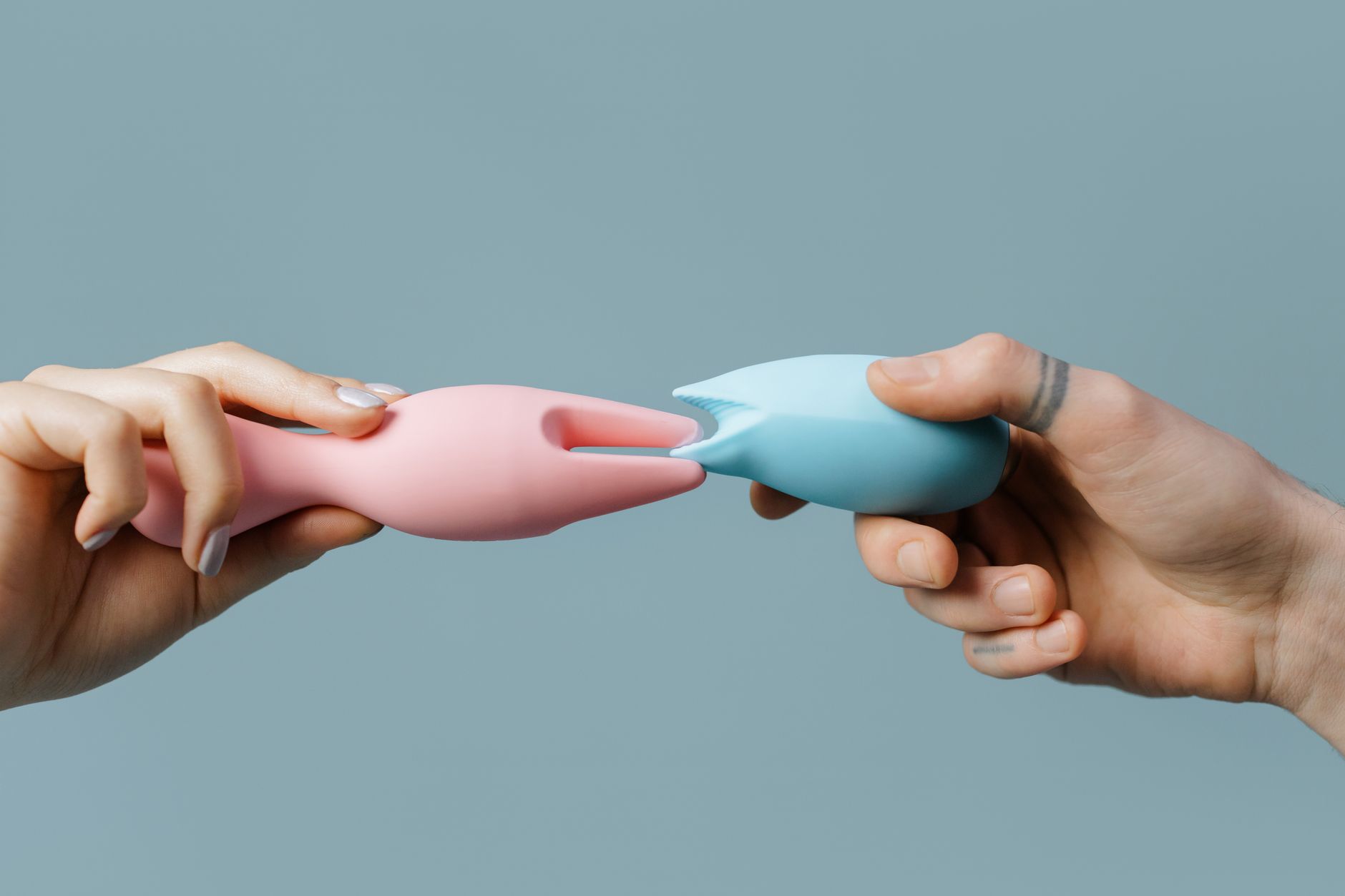
Lemon vibrators, and clitoral vibrators generally, change this dynamic entirely. Not because they replace your partner or fix the underlying mismatch, but because they give the higher-desire partner actual agency over their own pleasure instead of waiting for someone else to want them enough.
Why desire mismatches feel so personal (even when they're not)
The first thing to understand is that desire mismatch is almost never about attraction. I've worked with couples where both partners find each other wildly desirable, and yet their desire frequency is off by miles. Life stress, medication, hormones, neurodivergence, past relationships, attachment style, work anxiety, sleep deprivation. All of these shift how much sex someone wants in a given week.
When the mismatch is unaddressed, it gets weaponized. The higher-desire partner interprets rejection as "you don't love me" or "I'm not attractive." The lower-desire partner feels like they're failing, or being coerced. Resentment builds. Sex becomes a negotiation instead of a connection.
A lemon clitoral vibrator breaks that cycle by offering a third option: one partner can meet their own needs without involving the other, while the relationship stays intact.
How independent pleasure actually strengthens couples
This might sound counterintuitive, but here's what the research shows. Couples where both partners have independent access to pleasure report higher satisfaction, less resentment, and paradoxically, more frequent partnered sex. Why? Because the lower-desire partner isn't carrying the burden of "I have to perform or my partner will suffer." The higher-desire partner isn't carrying the burden of constant rejection.
When you remove the pressure, sex becomes something you choose because you want it, not because you're obligated. That changes everything.
Using a lemon vibrator on your own takes about 10 to 15 minutes and doesn't require negotiation, scheduling, or anyone's approval. It's portable, discreet, and solves the immediate problem: sexual satisfaction. More importantly, it reframes the conversation. Instead of "Why don't you want me?" it becomes "I'm taking care of myself, and I'd love to be close to you when you're ready."
The conversation you need to have first
Before you buy a lemon clitoral vibrator, you need to talk to your partner. Not about the vibrator itself, but about the mismatch. Here's what I recommend saying:
"I've noticed our desire levels don't always match up, and I don't think that's something we should ignore or pretend doesn't hurt. I love you, and I don't want either of us to feel pressured or rejected. I'm thinking about using a vibrator on my own when you're not in the mood, not instead of us being together, but in addition to it. I wanted to tell you that upfront because I don't want this to be a surprise."
That conversation does three things. It names the problem directly. It takes the pressure off both of you. And it frames solo pleasure as self-care, not infidelity.
Some partners will feel relieved. Some will feel threatened. If your partner feels threatened, that's worth exploring. Sometimes it's actually about something else. Sometimes it's insecurity. Sometimes it's about control. Those are real conversations to have, ideally with a therapist, not with a vibrator as the scapegoat.
How to actually use a lemon vibrator in a mismatched desire situation
The practical part is simpler than the emotional part.
When your partner isn't in the mood, and you are, you have a few options. You can use your lemon vibrator solo in another room, knowing you'll feel satisfied and less resentful. You can ask your partner to be in the room with you without direct participation. You can use it during foreplay even if penetration won't happen. You can use it while your partner is doing something else entirely, guilt-free.
The point is you have a choice. And choice removes resentment.
Start with pattern 1 or 2 on your lemon clitoral vibrator. The suction sensation is different from vibration, so it might take a minute to find your rhythm. Most people reach orgasm in 8 to 12 minutes. It's not a performance. You're not trying to last or warm up someone else. You're just taking care of yourself.
When desire mismatch is also about physical barriers
Sometimes mismatched desire has a physical component. When your body needs gentler stimulation, penetrative sex might feel uncomfortable or take longer to build to. A lemon vibrator lets you get to satisfaction without pain or waiting for your partner to match your pace.
Other times, one partner has a health condition that genuinely lowers their desire. Anxiety, depression, hormonal changes, medication side effects. None of those are character flaws. But they're also not reasons for the higher-desire partner to suffer in silence. A lemon clitoral vibrator is a practical tool in those situations.
The version of this that actually maintains connection
Here's the part people get wrong. They think using a vibrator solo means abandoning partnered sex. It doesn't. In fact, most couples I work with find that reducing the pressure around sex actually makes them want it more together.
One pattern that works well: the higher-desire partner uses a lemon vibrator on their own when needed, completely guilt-free. The lower-desire partner knows this is happening and doesn't feel obligated to participate. But then, when both partners are ready, partnered sex happens with less resentment and more actual desire on both sides.
You're not choosing solo pleasure over partnership. You're choosing partnership without the pressure. Those are wildly different things.
What if your partner says no to vibrators?
Some partners have religious beliefs, insecurity, or past trauma around vibrators. That's valid. And it's also worth having a deeper conversation about.
Is the issue the vibrator itself? Or is it fear that you're losing attraction, or that something is wrong with them, or that they're failing you? Because those conversations need to happen separately. The vibrator is just the topic. The real issue is usually about connection, worth, or safety.
A good therapist can help untangle that. A vibrator can't.
If your partner truly won't budge on vibrators, you still have options: manual masturbation, fantasy, audio erotica. The specific tool matters less than the principle. You deserve sexual satisfaction whether your partner is in the mood or not.
The bottom line on mismatched desire
Desire mismatches end relationships that could have survived if both partners felt sexually satisfied. They don't end them because one person loves the other less. They end them because someone is always frustrated, rejected, or pressured.
A lemon clitoral vibrator isn't magic. It won't fix underlying relationship issues or make someone want sex more. But it does something more useful. It says: your pleasure matters whether your partner is in the mood or not. Your satisfaction isn't their responsibility. And your relationship is strong enough to hold two people with different desires.
That frame change matters more than any tool ever could.
FAQ: Mismatched Desire and Solo Pleasure
What if using a vibrator makes my partner feel replaced?
That's a real worry, and it deserves a real conversation. The key is framing it as addition, not replacement. "I'm not choosing this instead of you. I'm doing this so I'm not resentful when we're together." If your partner still feels threatened after that, explore why. Is it insecurity? Is it about control? Is it about past experiences? Those are the real conversations to have. The vibrator is just the surface.
Can couples use a lemon vibrator together if they have different desire levels?
Absolutely. Some couples find that using a vibrator together, without the pressure of penetration, actually reconnects them. You could use it during foreplay. You could ask your partner to hold it while you guide them. The key is that both people feel like they're choosing to participate, not that someone is waiting for the other to finish.
How often should I use a vibrator if my partner doesn't want sex?
As often as you want. There's no limit. Using a lemon vibrator doesn't "use up" your sexuality or make you less interested in partnered sex. If anything, regular solo pleasure makes you more interested in partnership because you're satisfied, not desperate.
Does using a vibrator alone count as cheating?
Not unless you and your partner have explicitly agreed that it does. Some relationships have that boundary. Most don't. The key is knowing what your partner's actual boundaries are, not assuming. Have the conversation. You might be surprised by what they say.
What if I want to start using a vibrator but I'm embarrassed?
Embarrassment usually comes from shame about pleasure, and that's worth examining. You're not doing anything wrong. You're taking care of yourself. If your partner shames you for that, that's a red flag worth noticing. A healthy partner wants you to be sexually satisfied, whether they're involved or not.
Can a lemon clitoral vibrator actually help if my partner has lost interest in sex entirely?
It can help you, absolutely. It won't fix the underlying issue if your partner has lost desire due to depression, medication, health issues, or relationship problems. But it does solve the immediate problem: you get to have sexual satisfaction. And sometimes, paradoxically, when the pressure is off, lower-desire partners reconnect with their own sexuality. Not always. But sometimes.
When to bring in help
If desire mismatch is causing real conflict, a sex therapist or couples counselor who specializes in sexual issues can help. They can untangle whether this is about desire, connection, communication, or something else entirely. A lemon vibrator is a tool. Therapy is the deeper work.
Your pleasure matters. Your partner's comfort matters. Your relationship matters. Finding a solution that honors all three isn't about compromise. It's about actually listening to what both people need.