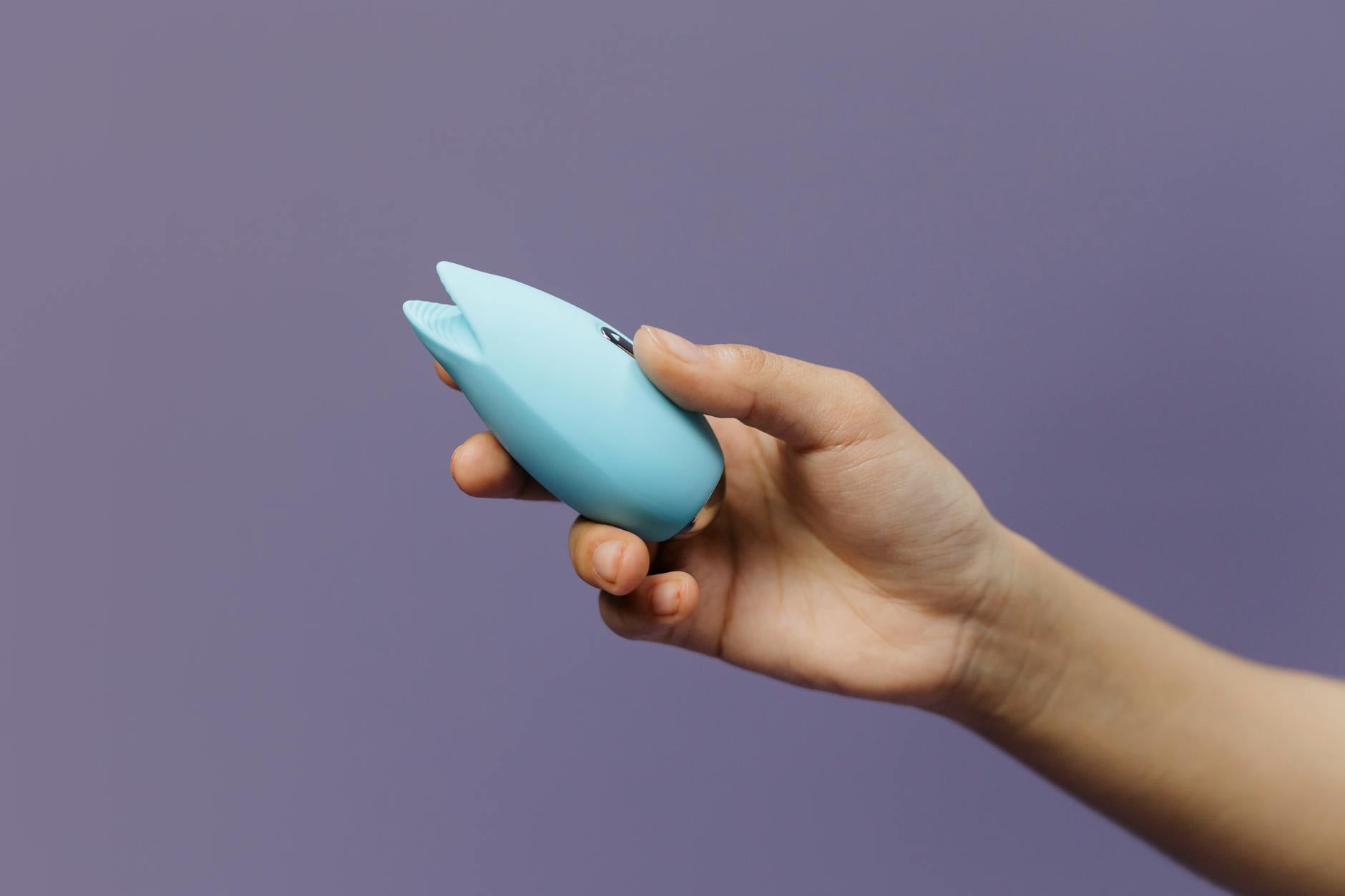
Let's name what's actually happening
Here's the thing nobody says clearly: you can have incredible, reliable orgasms alone and absolute nothing with a partner. Both true at the same time. No contradiction. And it's weirdly common.
The disconnection usually feels like a puzzle. Your body knows exactly how to respond to specific patterns, pressure, and rhythm when you're using a lemon clitoral vibrator solo. But the moment someone else is involved, the whole nervous system shifts. Arousal stalls. Sensation flattens. Sometimes it disappears entirely. So you start wondering if there's something wrong with the relationship, your body, or your desire. Usually, it's none of those things.
It's a nervous system issue, not a pleasure issue or an intimacy issue. And there's actually a pathway through it.
Why the nervous system disconnects during partnered sex
When you're alone with a lemon clitoral vibrator, your brain isn't working very hard. You know exactly what's coming. There's no performance pressure, no worry about whether someone else is enjoying themselves, no hypervigilance about being "too loud" or "taking too long." Your parasympathetic nervous system (the part that allows pleasure) is in charge.
The second a partner is involved, your brain's threat-detection system wakes up. Even if intellectually you trust this person completely. Even if you love them. Even if there's zero actual danger. Your nervous system is scanning: Are they watching me? Do I look the way I think I look? Am I doing this right? What if this doesn't work? What if they lose interest?
That's not a character flaw. That's neurobiology. The brain can't simultaneously scan for threat and create pleasure. Threat detection shuts down arousal.
For many people, lemon vibrators have actually made this worse. Why? Because once you know what intense pleasure feels like with a specific tool, the contrast between that solo experience and the dimmer experience with a partner becomes really obvious. And then the pressure increases. You start using the vibrator alone thinking "I should be able to feel this with them," which makes the gap feel even wider.
The actual mechanics of reconnection
Here's what I tell couples in my practice: the lemon clitoral vibrator isn't a shortcut to pleasure. It's a permission slip. A way to tell your nervous system: "This is safe. This is allowed. You can turn pleasure back on."
But that only works if you're using it intentionally in the context of partnered intimacy, not as a workaround to avoid the discomfort.
Three shifts that matter:
First, introduce the vibrator in non-sexual touch. Not during foreplay yet. Just have your partner hold it while you're clothed. Or let them press it against your arm, your shoulder, your neck. The goal is to let your nervous system get used to pleasure happening in their presence without the pressure of "this should lead to sex." This is weirdly powerful.
Second, slow down the path to intercourse. I know that sounds counterintuitive when intimacy already feels stuck. But when you're rushing to "finish" with the vibrator so you can transition to partnered sex, you're reinforcing the idea that the vibrator is the warm-up act and partnered sex is the real thing. Flip it. Use the lemon clitoral vibrator and let that be the whole event. Let your partner watch, touch you elsewhere, be present. No exit strategy.
Third, communicate what you actually need. Not "I need more stimulation" (though maybe true). More like: "I need you to not watch my face" or "I need you to keep touching me even if I go quiet" or "I need to feel like you're enjoying this too." The specificity matters because vague requests make your nervous system keep working to figure out what the other person wants.
What lemon vibrators teach your partner about you
One of the most underrated things about using a clitoral vibrator with a partner is that it removes the guessing game. Your partner literally gets to see and feel what works. How much pressure. What rhythm. What pattern. Whether you need build-up time or whether you're already halfway there.
Most people never get that information because they're too self-conscious to show it. The vibrator bypasses the self-consciousness. It's scientific. It's not about their technique failing. It's just data.
For some couples, that's revolutionary. Suddenly the partner understands that the person they love doesn't need them to be a human vibrator. They need the specific frequency, the specific texture, the specific pressure that a lem vibrator provides. And then the partner's job becomes something different and often more intimate: being present, reading the shifts in breathing, noticing what builds the moment, adding touch and attention in other places.
That's actually harder than thrusting. And it's also way more connecting.
When the vibrator becomes a crutch (and how to know)
There's a difference between using a lemon clitoral vibrator as a bridge and using it as an escape. A bridge means: "I'm bringing this tool into our intimate time because it helps me feel more pleasure when we're together." An escape means: "I need this to avoid feeling anything about the actual disconnection between us."
How to tell the difference? If you can imagine intimacy without the vibrator and feel interested, it's a bridge. If the thought of intimacy without it feels flat or impossible, it's probably an escape. That's not a judgment. It's just information that maybe the actual intimacy issue needs attention separate from the pleasure issue.
This is where a lot of couples get stuck. They assume if they add the right tool, the disconnection will dissolve. But if there's resentment, mismatched desire, lack of emotional safety, or just years of not being fully honest with each other, no vibrator can fix that. The tool reveals the gap. It doesn't close it.
If that resonates, that's actually the signal to talk to someone who specializes in this. A therapist or couples counselor. Not because anything is broken, but because reconnecting pleasure and intimacy sometimes requires talking through the stuff that disconnected them in the first place.
Using lemon vibrators to rebuild communication during sex
Here's what actually works for most of the couples I work with: the vibrator becomes the conversation starter. Not metaphorically. Literally.
You're using the lem vibrator during foreplay and your partner asks: "Does that feel good?" And instead of the reflex "yeah, great," you could say something like: "Yeah, but actually, I realize I like when you use it at this angle better." Or: "It does, and I also notice I'm getting in my head about whether this is taking too long."
These micro-conversations are nervous system gold. They tell your partner what you actually need. They tell your partner that communication is safe. They tell both of you that pleasure can be adjusted in real time, that it's not fixed, that it's actually a collaboration.
That's the part that bridges the gap between solo pleasure and partnered pleasure. Not the vibrator itself. The conversation it makes possible.
The pattern that actually shifts things
If you're going to use a lemon vibrator with a partner to rebuild the connection between pleasure and intimacy, here's the progression:
Week 1-2: Introduce the vibrator in non-sexual contexts. Clothed. No pressure for anything to lead anywhere.
Week 3-4: Use the vibrator during foreplay, but make it the main event. Not a warm-up. Full presence from both of you.
Week 5+: Start experimenting with the vibrator at different points. Early foreplay. Mid-way through. During intercourse if that feels good. The point is flexibility, not finding the "right" moment.
Throughout: Small, specific conversations. "That felt really good when..." Not "I need you to be better at this."
The nervous system is slow to change. You're essentially retraining it to associate pleasure with the presence of another person. That takes repetition. But it works.
What doesn't work (and why)
Three things I see couples try that backfire:
First, using the vibrator as punishment or proof. "See, this is what I need" said with anger or resentment. Your nervous system hears the subtext. The vibrator becomes associated with conflict, not safety.
Second, expecting the vibrator to create desire that isn't there. If you don't actually want to be intimate with this person, no clitoral vibrator will fix that. Sometimes the disconnection between pleasure and intimacy is telling you something real about the relationship.
Third, using the vibrator to avoid the conversation. A lemon clitoral vibrator is a tool, not a therapist. If there's actual disconnection between you and your partner, the vibrator might make it easier to have sex, but it won't make it easier to feel close.
FAQ
Can using a lemon vibrator alone actually damage the ability to orgasm with a partner?
Not inherently. But repetition creates neural pathways. If you orgasm the exact same way every single time using a vibrator with a specific rhythm and pressure, your body learns that specificity. That's normal neuroplasticity. The fix isn't to stop using the vibrator. It's to sometimes use different patterns, sometimes use it with a partner present, sometimes combine it with different types of touch. Variety trains your nervous system to be flexible.
Is it normal to have better orgasms alone than with a partner?
Completely normal. You control the variables alone. You know what's coming. There's no performance pressure. Partnered sex is messier and involves another person's timing and energy. Some people prefer that. Some don't. Neither is wrong. It's just information about what your nervous system needs.
Should I use a lemon clitoral vibrator if my partner feels insecure about it?
This deserves a real conversation, not a quick answer. If they're insecure because they think the vibrator means they're failing, that's worth addressing (spoiler: they're not failing). If they're insecure because they feel replaced or like the vibrator is more important than they are, that's also worth taking seriously. Sometimes the vibrator is a symbol of a larger disconnection. Sometimes it's just insecurity that shifts once they understand what it actually does. Talk about it directly.
How do I bring up using a lem vibrator if we've never discussed toys before?
Don't frame it as a problem. Frame it as curiosity or enhancement. "I've been thinking about trying a clitoral vibrator during sex. I'd like to know if you'd be interested in that." Then sit with their response. Some people need time to think. Some people need reassurance that it's not about them. Give them that space.
What if the vibrator works great but intimacy outside the bedroom still feels distant?
The vibrator is a bedroom tool. If you want to rebuild emotional intimacy, that happens elsewhere. Touch outside of sex. Conversation without an agenda. Time together that doesn't lead to sex. Going to therapy. Sometimes pleasure and intimacy need different work.
Can lemon vibrators help if I have anxiety during sex?
Sometimes. If the anxiety is specifically about your body's response ("will I come?"), the vibrator can reduce that pressure because you know you have a reliable path to orgasm. But if the anxiety is about the relationship or about being vulnerable, the vibrator might just make it easier to avoid the actual issue. Both can be true.
The real goal
Using a lemon clitoral vibrator with a partner isn't about proving anything or fixing anything. It's about creating the conditions where your nervous system can relax enough to experience pleasure. That might look like using the vibrator solo and having your partner nearby. It might look like them using the vibrator on you. It might look like you using it while they touch you elsewhere. There's no single right way.
The point is intentionality. Slow introduction. Communication. And the willingness to be honest about what you actually need. Sometimes that need is for the vibrator. Sometimes it's for a different kind of touch. Sometimes it's for a conversation about why the disconnection happened in the first place.
If you're stuck in that middle place where pleasure feels good alone and impossible with a partner, start with one small shift. Introduce the vibrator without pressure. Notice what your nervous system tells you. Then go from there. You don't need to figure it all out at once.