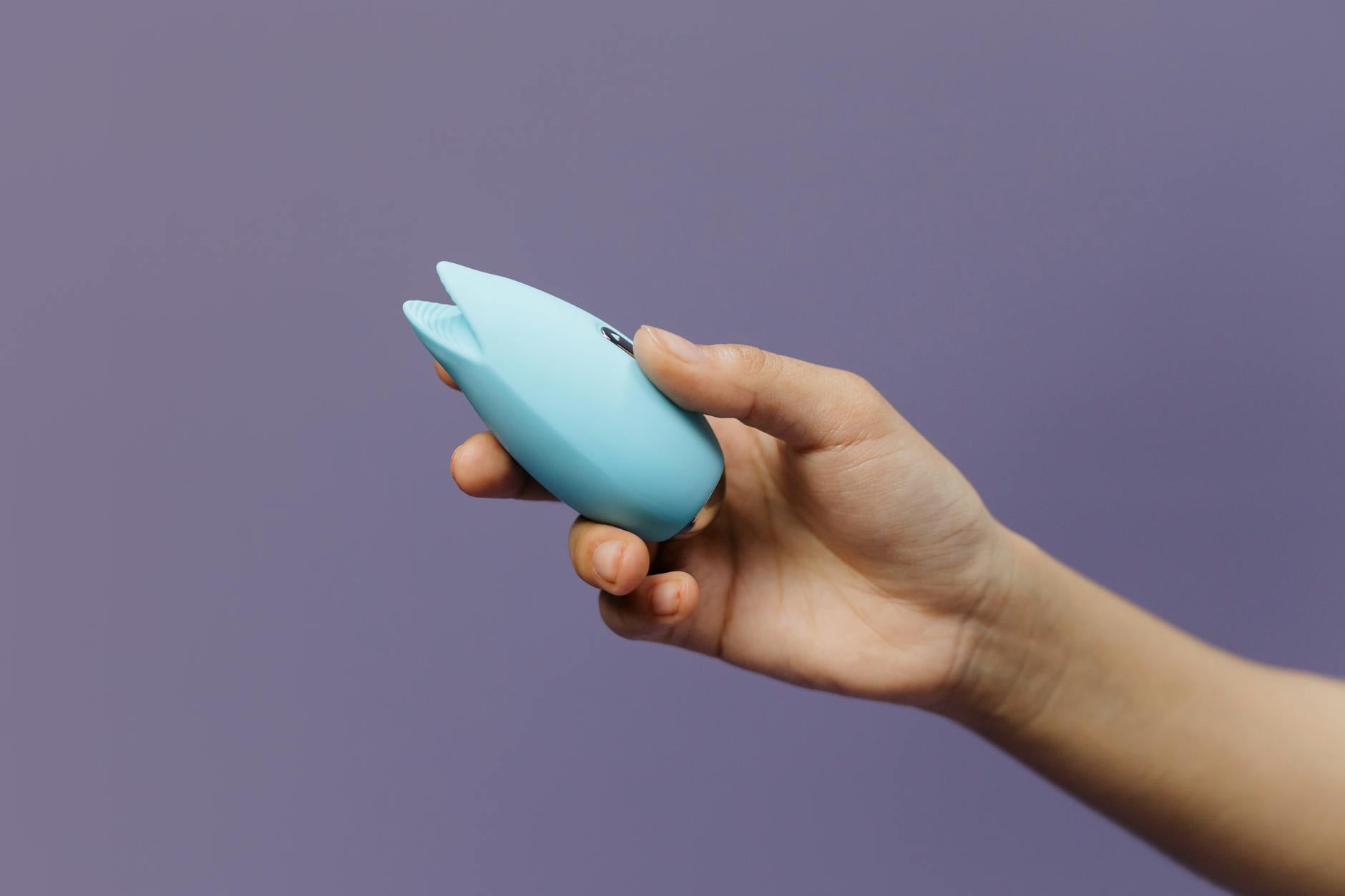
How to Use Lemon Vibrators When Sensation Changes With Age
Let's be real. The way your clitoris responds to touch at 45 is not the same as it was at 25. This isn't failure. It's not even loss, necessarily. But it is different—and most people have no idea why, which means they assume something's broken when really the hardware just works on a different voltage now.
I see this all the time in my practice. Someone picks up a lemon vibrator and thinks "This used to feel amazing." Then they use it the same way they did ten years ago and feel confused when it doesn't land the same. The device is fine. Their body is fine. The match between them has just shifted.
Here's what's actually happening, and what you can do about it.
Why sensation flattens, narrows, or changes shape over time
There are three main reasons clitoral sensation shifts with age, and none of them mean you're losing capacity for pleasure.
1. Nerve sensitivity recalibrates. The clitoris has about 8,000 nerve endings packed into a space smaller than a pea. Over decades, repeated stimulation changes how those nerves respond—they become less reactive to the same input level, but often more responsive to different types of stimulation. This is why someone who loved hard vibration at 30 might find intense suction patterns (like the ones a lemon clitoral vibrator delivers) actually more satisfying at 50.
2. Tissue changes. Blood flow to the clitoris is tied to cardiovascular health, hormones, and pelvic floor tone—all of which change over time. Less blood flow means slower arousal and less engorgement, which can make subtle vibration patterns feel more effective than the sledgehammer approach that used to work. The clitoris is still there, still functional, just operating under different conditions.
3. Attention shifts. This sounds small but it's not. In your 20s and 30s, your brain might have been wired to respond to novelty and speed. By your 40s and 50s, you're often much more attuned to rhythm, pattern, and sustained sensation. Your nervous system has matured. A lemon vibrator's pulsing pattern that felt "boring" a decade ago might now feel hypnotizing.
What lemon vibrators do differently for aging bodies
If you've never used a lemon vibrator (the clitoral suction-style toy that creates gentle pressure and release rather than direct buzz), this is the time to pay attention. Here's why they align so well with how sensation works now.
Suction vs. vibration. Traditional vibrators move back and forth. A lemon vibrator creates rhythmic suction and release—it engages tissue without the same jarring motion. For someone whose clitoris is less reactive to raw buzz, suction stimulation often feels more satisfying because it engages nerves through a different pathway. You're not fighting dead sensation; you're using a technique that works with how your body currently responds.
Pattern flexibility. Most lemon vibrators have multiple intensity settings and rhythm patterns. As sensation becomes less uniform over time—maybe your left side is more sensitive than your right, or the tip responds better than the base—being able to dial in a specific pattern becomes essential. You're not looking for one-size-fits-all intensity anymore. You're looking for precision.
Ramp-up dynamics. Because suction creates gradual pressure rather than instant buzz, arousal can build more deliberately. This actually matches how bodies work better after 40 or so. Rushed stimulation often misses the window. Slow, patterned stimulation gives your nervous system time to recognize arousal and respond to it.
How to dial in intensity when sensation feels muted or uneven
Start low and stay patient. This is genuinely the biggest mistake I see.
If you've been using a standard vibrator at setting 8 out of 10, don't pick up a lemon vibrator and go straight to pattern 5. Start at pattern 1. Sit with it for 30 seconds. Notice where you feel it most—usually the tip or underside of the clitoral hood. Don't judge whether it feels "like enough." Just map the sensation.
Then move to pattern 2. Again, 30 seconds. You're not trying to orgasm yet. You're teaching your nervous system how this particular tool talks to your body. Arousal builds in layers now more than ever.
When you reach a pattern that feels like it's actually doing something, stay there for 2-3 minutes. Let your body get interested. Then—and this matters—increase intensity or change patterns only when arousal plateaus, not continuously. You're hunting for the edge, not the finish line.
Many people find that by their 40s, they need 8-15 minutes of sustained stimulation where they used to need 3-5. This isn't dysfunction. Your body is more complex now. Give it the time it wants.
The numbness trap (and how to avoid it)
Here's a tricky one. Sensation can feel great for 10 minutes, then vanish. Totally numb. Usually around minute 12-15.
This happens for two reasons. First, sustained pressure on the clitoris actually does produce temporary numbness—it's a nerve thing, not a sign you did something wrong. Second, your pelvic floor might be tensing without you knowing it, which chokes off blood flow to the area. The sensation dies not because the vibrator stopped working, but because the muscle contracted.
Solution: If numbness hits, stop for 2-3 minutes. Seriously. Don't power through. Use the break to notice your breath. Most people holding tension during sex are also holding their breath. Slow your breathing down. Do a few pelvic floor pulses (squeeze and release, slowly). Then restart at a lower intensity.
You can also rotate between patterns rather than staying on one. Many lemon vibrators have 3-5 different patterns. Use pattern 1 for 5 minutes, then switch to pattern 3 for 5 minutes. The novelty alone keeps sensation from flattening out.
When arousal is slow to build or feels distant
If you find that even with the right technique, arousal still feels sluggish or disconnected from what you're feeling physically, that's worth investigating—but not with a different toy. With context.
Are you warmed up? Not just physically (though that matters—longer foreplay is now non-negotiable). Mentally. Is your brain actually in the room, or are you worried about something? At this stage of life, mental arousal drives physical arousal in a way it didn't before. A lemon vibrator can't fix distraction. You have to.
Is stress or medication playing a role? Antidepressants, blood pressure meds, and even high cortisol from chronic stress can flatten sensation. Not make it disappear, but muffle it. If sensation feels muted across multiple sessions and you're on new medication or going through a high-stress period, that's the real variable, not the toy.
Have you talked to your partner (if you have one)? If you're using a lemon vibrator solo and it feels amazing but partnered sex feels flat, that's often an intimacy signal, not a sensation signal. There's more on that here.
Otherwise, I'd recommend experimenting with a lemon vibrator over 3-4 solo sessions before concluding whether it's right for you. Sensation takes time to recalibrate when you're trying a new tool.
Solo exploration as a recalibration tool
This is the part no one talks about but should. Using a lemon vibrator solo isn't just about orgasm. It's literally a way to map where you're sensitive now, what rhythms light you up, how long arousal actually takes in a zero-pressure environment.
Take one evening alone. No rush. Maybe 30 minutes. Approach it like you're learning your body again, because honestly, you are. It's changed. Your nervous system has changed. Your preferences might have too.
Notice: Which pattern makes you lean in rather than pull back? Does your arousal prefer steady rhythm or variety? Do you want constant stimulation or pulses with breaks? How long before your body actually gets interested? At what point does sensation start to flatten?
Write it down if you want. Seriously. "Pattern 3 at 5 minutes feels like the sweet spot. Pattern 2 bores me now. Numbness happens around minute 14." That data is gold. It makes partnered sex easier, it makes solo sessions more satisfying, and it keeps you from assuming something's wrong when really you just needed to know yourself differently.
Talking to your partner about what's changed
If you have a partner, using a lemon vibrator solo first matters for another reason: you need to know what you want before you try to show someone else. Many people stumble into this conversation sideways ("The vibrator doesn't work anymore" really means "I need different stimulation now" really means "Let's figure this out together") and it lands as criticism instead of collaboration.
Better approach: "I've been exploring solo and I've realized my body responds differently to suction patterns now than it used to. Want to experiment with a lemon vibrator together?" Invitation, not complaint. Data, not drama.
If your partner is used to providing stimulation with their hands or mouth, a lemon vibrator isn't a replacement. It's an addition. It lets you access sensation that friction alone can't deliver anymore. Most partners actually find this clarifying—they get to learn you again too.
People Also Ask
Does a lemon vibrator feel stronger than a regular vibrator?
Not stronger—different. A lemon clitoral vibrator uses suction-based stimulation rather than pure vibration, which engages the tissue in a distinct way. Many people find it actually more satisfying as sensation changes with age because it doesn't rely on the same rapid-fire nerve input that traditional vibrators do. Strength and satisfaction aren't the same thing.
Can sensation changes mean something's medically wrong?
Sometimes. If sensation changes suddenly (over days or a week) or is accompanied by pain, numbness in other areas, or urinary issues, talk to a doctor. But gradual changes over months or years? That's normal aging. Clitoral tissue, nerves, and blood flow all evolve. If you're concerned, a gynecologist familiar with sexual health can offer reassurance and sometimes practical solutions (like topical treatments if tissue thinning is contributing).
Why does one side of my clitoris feel more sensitive than the other?
Most people's bodies aren't perfectly symmetrical, and that includes the clitoris. As you age and tissue changes, asymmetry often becomes more noticeable. You might prefer to angle the lemon vibrator slightly to one side, or position your body so one side gets the initial contact. This is fine. Your body is telling you what works. Listen to it.
How long should I use a lemon vibrator before deciding it's not for me?
At least 3-4 sessions, ideally solo. It takes time for your nervous system to register a new stimulation pattern. Solo sessions matter because they're pressure-free—you can focus on sensation without wondering if your partner is getting bored. If after 4 sessions nothing clicks, it's probably not your tool. But most people find something shifts by session two or three.
What if I can't orgasm with a lemon vibrator but could with others?
Orgasm ability doesn't transfer perfectly between tools, especially as sensation changes. A lemon vibrator might be amazing for arousal and sensation but not the finish line. That's okay. You might use it for 10 minutes, switch to a different toy for the last 2-3 minutes, and that's your new routine. Flexibility is the real skill here, not loyalty to one device.
Should I use lubricant with a lemon vibrator?
Yes. Even if you don't think you need it. Lube reduces friction and helps the suction seal work better. Water-based lube is ideal for silicone toys (silicone lube can degrade silicone over time). And here's the thing most people don't realize: lube also lets you use slightly lower intensity settings and still feel everything, because it changes how the suction engages tissue. You might need 30% less intensity with good lube. That matters if sensation is already feeling muted.
The real takeaway
Sensation changes with age. That's not a problem to fix; it's information to act on. A lemon vibrator works because it meets your body where it is now, not where it was at 30. The suction-based stimulation, the patterning options, the sustained-pressure approach—all of this aligns with how sensation actually works after a few decades of life.
Your pleasure hasn't gone anywhere. It's just got different coordinates. Learning to read that map is the skill. A good lemon clitoral vibrator is just the tool that makes it easier.
If this resonates and you're navigating other shifts in intimacy as you age, consider reaching out. We're here to help.