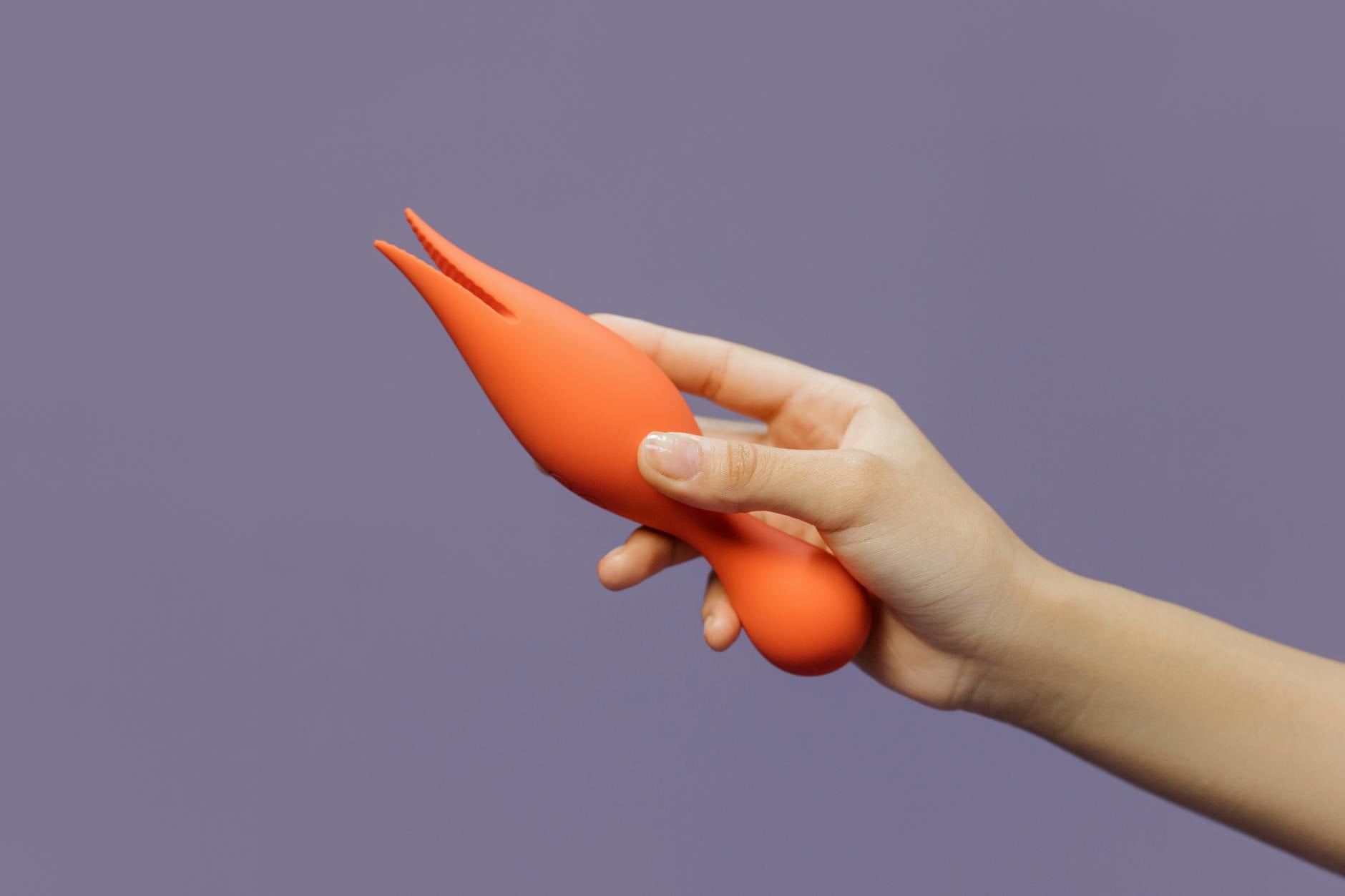
Let's talk about the thing no one admits
You bought a lemon vibrator. You turned it on. And your whole nervous system said absolutely not. The sensation wasn't pleasurable. It was too sharp, too intense, too much all at once. So you put it away and felt like something was broken inside you.
It's not. Hypersensitivity to vibration is completely normal. In fact, it's more common than you'd think, especially if your body has spent years in a low-sensation state.
Why lemon clitoral vibrators can feel overwhelming
There are three reasons sensation might hit too hard, and understanding which one you're dealing with changes how you approach it.
First, there's the baseline sensitivity issue. Some people's clitoral tissue is naturally more reactive. The nerve endings are dense and close to the surface. A lemon vibrator designed for moderate stimulation can feel like direct contact with a live wire. This isn't weakness. It's actually a sign of good nerve function.
Second, there's the context issue. If you're approaching a toy while stressed, anxious, or mentally elsewhere, your body doesn't relax. The pelvic floor tightens. Blood flow stays shallow. You're essentially trying to have pleasure while your nervous system is in fight-or-flight mode. That's when even gentle suction feels invasive.
Third, there's the novelty issue. If you've spent most of your sexual life with partnered touch or very gentle internal sensation, external clitoral vibration is a completely different stimulus. Your brain hasn't coded it as safe yet. Your body needs time to register it as pleasure rather than intrusion.
The intensity hierarchy that actually works
Here's the thing about lemon vibrators: they don't have a "low" setting that feels like almost nothing. They're engineered for noticeable sensation. That's the point. But you can work around it.
Start completely clothed. Yes, really. Put the lemon vibrator against your jeans or underwear and turn it on pattern 1. What you're doing is letting your nervous system get curious about the sensation without any vulnerability. No skin exposure. No direct contact. You're training your brain to recognize the vibration as safe.
Try this for 30 seconds at a time, once a day, for three to five days. You're not trying to feel pleasure yet. You're just building familiarity. It sounds boring. It works.
Once clothed sensation doesn't feel startling anymore, move to over-the-underwear contact. Still pattern 1. This is intimate without being intense. The fabric acts as a buffer that softens the sensation while still letting you feel the shape and rhythm of the toy.
After another three to five days of short sessions, try direct contact but start on pattern 1 for literally ten seconds. That's it. Ten seconds of skin-to-skin contact. Then pause. Breathe. Notice what you feel without judgment.
Gradually extend to thirty seconds, then one minute. You're not chasing orgasm. You're building tolerance and pleasure association in parallel.
The mental piece that changes everything
Here's what I see most often: people treat hypersensitivity like a technical problem when it's actually an anxiety problem. Your body isn't reacting to the vibration itself. Your body is reacting to the story you're telling about the vibration.
If you're thinking "This is too much, something's wrong, I can't do this," your nervous system is going to feel threatened. The sensation becomes intolerable because your mind has already labeled it as dangerous.
Instead, try this: when you feel that overwhelm, pause and get curious. What exactly is overwhelming? Is it the intensity, or is it the surprise? Is it the physical sensation, or is it the emotional vulnerability of trying something new? Naming the actual feeling shrinks it.
Many of my clients find that they can tolerate way more sensation if they're in control of the pace. Using a lemon vibrator solo, at your own speed, with the option to stop instantly, feels radically different from partnered use where you have to coordinate. Honor that.
Practical adjustments that help right now
Four things I recommend immediately:
First, use lubricant even if you don't think you need it. Water-based lube changes how suction feels. It creates a smoother seal and distributes intensity across a wider area instead of concentrating it in one spot. It also gives you explicit permission to slow down, which your nervous system needs.
Second, try angle variations. A lemon vibrator feels different depending on whether you're holding it perpendicular to your body, at an angle, or moving it side to side. One of those angles will feel less intense than direct-on stimulation. Experiment. Your body will tell you.
Third, use breathing to regulate your nervous system. Before you turn the toy on, take three deep breaths. When sensation kicks in, don't hold your breath. Breathe steadily through your nose and out through your mouth. Breath controls arousal response more than most people realize.
Fourth, set a timer for five minutes maximum in the first few weeks. Knowing you have an endpoint makes it easier to stay present. You're not signing up for an hour of intensity. You're committing to five minutes of exploration. That's manageable.
The difference between "too much" and "not for me"
There's a real distinction I need to make here. If you follow the escalation protocol and after two weeks of gradual exposure you still feel nothing but discomfort, that's valuable information. Some people genuinely don't enjoy external clitoral vibration. That's not a failure. That's preference.
But most people who think it's "not for them" haven't actually given their body permission to adjust. They've tried it once, felt overwhelmed, and concluded it doesn't work. That's like trying a new food once and deciding you hate the entire cuisine.
The sweet spot usually shows up somewhere between days seven and fourteen of the gradual protocol. That's when your nervous system has integrated the sensation enough that pleasure can start happening alongside it.
When to bring a partner into the conversation
If you're in a relationship and your partner wants to use a lemon vibrator during partnered sex, the hypersensitivity issue gets more complicated. You're managing both your own arousal and their expectations. That's a lot.
Honestly, the easiest path is solo exploration first. Get comfortable with the toy by yourself, figure out your optimal intensity, find your preferred patterns. Then when you introduce it into partnered play, you already know what works. You can guide them. You can say "slower" or "just pattern 1" without that being a rejection.
Some couples also find that the person experiencing hypersensitivity prefers to hold the toy themselves, especially early on. That gives you agency and control, which calms the nervous system faster than handing control over to someone else.
FAQ: Overwhelm and lemon vibrators
Will my sensitivity to vibration eventually decrease so intense sensation feels normal?
Yes, but not quite the way you're thinking. You won't become less sensitive. Your nervous system will become more comfortable with the sensation, which feels the same from the inside. Habituation is real. After a few weeks of regular use, the same pattern that felt jarring initially will feel familiar. That familiarity makes room for pleasure.
Is it bad to force myself through the discomfort if I really want to enjoy a lemon clitoral vibrator?
No, but there's a difference between productive discomfort and re-traumatizing yourself. Productive discomfort is "this feels new and unfamiliar, and I'm going to stay with it." Re-traumatizing is "this feels genuinely invasive, my body is shutting down, and I'm ignoring the signal." Listen to your body's actual language. Pushing through when your nervous system is in freeze or fight mode makes it worse, not better.
Can I use a lemon vibrator on other parts of my body if direct clitoral stimulation feels too intense?
Absolutely. Thigh stimulation, inner arm, neck, breasts—these areas are sensitive but less reactive than the clitoris. You can explore sensation intensity on less vulnerable areas first, which builds tolerance gradually without the pressure of "this should feel good on the most sensitive part of my body."
What's the difference between vibration intensity and pattern, and which matters more for hypersensitivity?
Intensity is the power level. Pattern is the rhythm. For hypersensitivity, pattern often matters more than intensity. Some people can handle high-intensity steady vibration but find pulsing patterns overwhelming. Others find that rapid patterns are tolerable but slow, deep pulses feel intense. Experimenting with different patterns on pattern 1 intensity usually yields faster results than jumping through intensity levels.
Should I use numbing products to make lemon vibrators feel less intense?
No. Numbing desensitizes the very tissue you're trying to learn to enjoy. You're working backward. The goal is integration, not avoidance. Give your nervous system time to process the sensation naturally.
How do I know if I'm just not someone who enjoys external vibration?
Give it three weeks of the protocol I outlined. Three weeks, five to ten minutes daily maximum, gradual exposure from clothed to direct contact. If after that time there's still zero pleasure signal happening, you've genuinely tried. Then it's fair to say external vibration isn't your thing. But most people who think that haven't actually given their body a real chance.
The real timeline
Honestly, this is where I see people give up too fast. They expect to feel amazing on day one. Then they feel overwhelmed, think something's wrong, and put the toy in a drawer.
Most pleasure recalibration takes two to three weeks of consistent, patient exposure. Your nervous system is literally retraining itself to receive sensation as safe and pleasurable. That takes time. Rushing it defeats the whole point.
Here's what usually happens by week three: the sensation that felt overwhelming on day one starts feeling manageable. By week four, some pleasure starts showing up. By week five or six, you're probably wondering why you almost gave up. The same lemon vibrator that felt like too much now feels just right.
Your pleasure matters. It's worth the patience. You deserve a tool that actually works for your body, not a toy that makes you feel broken. The path to that is slow, deliberate, and genuinely kind to yourself along the way.
Next steps
If you're still struggling after two weeks of consistent practice, or if the overwhelm is tied to trauma or anxiety about sensation itself, that's worth talking through with someone. The right therapist or sex educator can help you understand what your nervous system is actually protecting you from. Sometimes hypersensitivity isn't about the toy. It's about deeper safety work that needs to happen first.
But for most people, the gradual exposure protocol works. Start small. Stay patient. Let your body surprise you with what it actually enjoys once it trusts that the sensation is safe.
Ready to explore this properly? Check out our guide to using lemon clitoral vibrators for foundational technique, or reach out if you want to talk through your specific situation.