The plot twist nobody warns you about
Most people expect menopause to dull sensation. But for a lot of women, the opposite happens. Estrogen drops, tissues thin, and suddenly touch that felt pleasant for decades now feels like sandpaper. The irony is brutal: your brain might want sex more than ever, but your vulva is basically saying "please don't."
Here's what I've learned from talking to hundreds of women about this exact frustration. The sensitivity increase isn't random. It's physiological, it's temporary if you know how to work with it, and it's one of the few post-menopause shifts where a lemon clitoral vibrator specifically helps in ways other tools don't.
Why menopause makes everything feel sharper
Think of your vulval tissue like the lining of your mouth. When estrogen is high, that tissue is plump, elastic, and well-lubricated. When estrogen tanks, the tissue gets thinner and drier. Thinner skin has less cushioning between nerve endings and the surface. That means the same amount of stimulation now registers as more intense.
At the same time, blood flow to the area decreases. Your body heals slower. Micro-tears from friction don't resolve as quickly. And the nerves themselves become hypersensitive as a compensation mechanism, like turning up the volume on a speaker that's already too loud.
Two more things worth knowing. Progesterone also drops, and progesterone is a natural inflammatory dampener. Without it, any irritation feels sharper. And the pelvic floor muscles, which are also estrogen-responsive, can tighten and hold tension more easily. A tight pelvic floor makes any touch feel more intense because there's no cushioning from muscle relaxation.
Why a lemon vibrator works differently than other toys
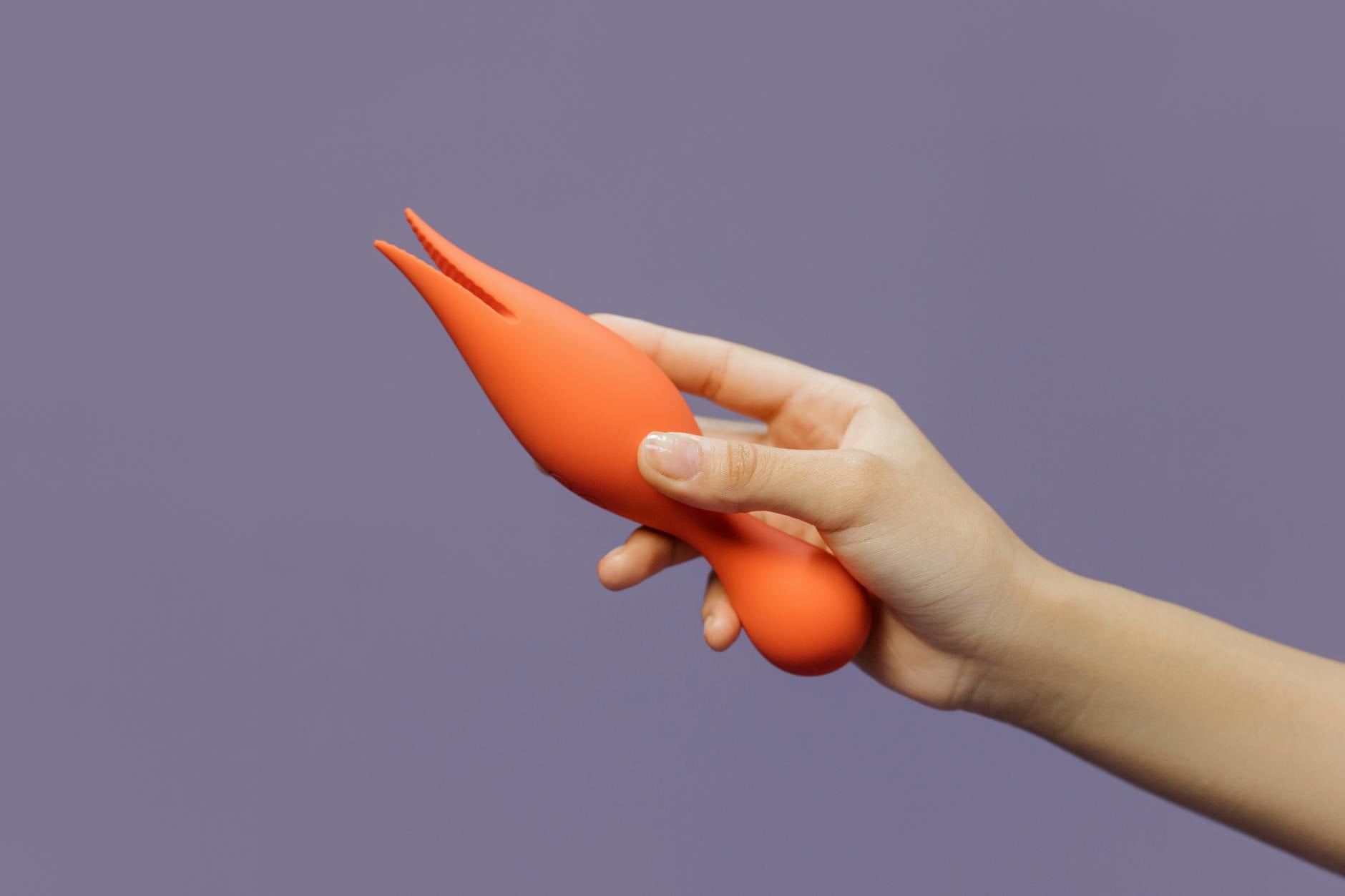
Most vibrators use direct vibration or rotation. If your vulva is already hypersensitive, direct vibration can feel overwhelming. A lemon sucker like the Lem uses air-suction technology instead. Instead of friction or buzz traveling through delicate tissue, suction creates a gentle rhythmic pulse that stimulates the clitoris without direct mechanical contact.
Think of it like the difference between someone tapping your arm versus someone creating a gentle vacuum with their mouth. Same nerve activation, completely different sensation profile.
With a lemon clitoral vibrator that uses suction, you can start on the gentlest setting and gradually increase without ever worrying about micro-abrasions. The contact is sealed and contained. There's no sliding friction that can irritate already-thin tissue. For post-menopausal vulvas, that distinction matters enormously.
The three-step setup that makes the biggest difference
Step one: Lubrication is not optional. I know this sounds obvious, but I mean it. Use a water-based lubricant generously. Not because your body is broken, but because thin tissue absorbs lubrication faster. Reapply mid-session without shame. A good lube turns a potentially uncomfortable experience into a pleasurable one.
Step two: Extended warm-up time. Arousal in post-menopause takes longer to build. Budget 15-20 minutes before you even think about turning on the lemon vibrator. Touch your partner or yourself in ways that feel good but aren't goal-oriented. Let blood flow move back to the area gradually. This is not wasted time. This is the foundation.
Step three: Start absurdly low and go slow. If you're used to using toys at medium or high intensity, that instinct will work against you now. Start at level one or two on any clitoral vibrator, including the Lem. Spend five minutes there. Notice what feels good. Only increase if you want more, and increase by one level at a time. There is no prize for getting to level five faster.
How to position the lemon sucker for comfort
Direct contact isn't your friend right now. Instead of placing the Lem directly on your clitoris, hold it so the seal is around the area without the most sensitive part receiving full suction pressure. This distributes stimulation across more tissue and reduces intensity.
Many women find that angling slightly to one side feels better than direct center contact. Your clitoris is not a button. It's a complex structure with a sensitive glans and a less sensitive shaft. Experiment with positioning to find the angle that feels good instead of overwhelming.
Also important: the seal matters. A good seal means consistent pressure and sensation. If the seal is loose, you'll get inconsistent stimulation, which can feel more jarring on sensitive tissue. Take a second to get it right before you increase intensity.
The hormonal reality nobody mentions
If you're taking hormone replacement therapy (HRT), increased sensitivity might actually decrease over weeks or months as estrogen rebuilds tissue thickness. This is not immediate. But it's worth knowing because it means your adjustment period might be temporary.
If you're not on HRT and you're dealing with significant pain or hypersensitivity during sex, it's worth talking to a doctor who specializes in menopause. Topical estrogen creams work directly on vulval tissue without systemic absorption. They can genuinely transform sensation within weeks.
That said, not every increase in sensitivity requires treatment. Some women actually prefer the heightened sensation once they adjust their technique and expectations. Your pleasure isn't broken. It's just different.
What partners need to understand
If you're in a relationship, communication here is everything. Your partner's touch might feel too intense. Your body might need more time. You might want to use a toy during partnered sex in a way you never did before. None of this is rejection. It's adaptation.
The best conversations happen outside the bedroom first. "My body is feeling more sensitive lately, and we might need to adjust how we touch" is a logistics conversation. "I'm worried you won't find me attractive anymore" is a different conversation that deserves separate space.
When you do have sex or use toys together, your partner can help by asking for feedback. Slower. More lube. Less pressure. These are simple instructions, and they're not complaints. They're guidance.
When hypersensitivity is actually a sign of something else
Most post-menopausal sensitivity increases are just what I've described. But occasionally, hypersensitivity signals something worth addressing. Watch for these patterns.
If sensation is painful rather than just intense, that's genitourinary syndrome of menopause (GSM) or possibly vulvodynia. Both are treatable. If sensitivity appeared suddenly alongside discharge or itching, a yeast infection or bacterial imbalance might be the culprit, not menopause. And if you have a history of vulvodynia or neuropathy, post-menopause can unmask or worsen it.
A good gynecologist can figure this out in one appointment. Don't white-knuckle through pain thinking it's just what menopause means. It's not.
The adjustment timeline
Most women I work with adapt to post-menopausal sensation changes within 4-8 weeks of adjusting their approach. That includes lube strategy, positioning, toy choice, and arousal time. You're not healing tissue. You're recalibrating what works.
Some days will feel better than others. Stress, hydration, sleep, and your cycle (if you're not fully menopausal yet) all affect sensitivity. Grace with yourself is the only strategy that lasts.
The deeper pleasure shift
Here's what I want you to know that goes beyond technique. Increased sensitivity can actually open doors. When you slow down and pay attention to subtler sensations, you sometimes discover forms of pleasure you missed when sensation was blunt and obvious.
A lemon clitoral vibrator at low intensity, combined with extended arousal time and lube, sometimes leads to orgasms that feel more localized and intense than anything pre-menopause. Not always. But often enough that it's worth exploring with curiosity instead of frustration.
Your pleasure isn't behind you. It's just asking you to show up differently.
Questions you're probably asking
Can I use a regular vibrator if I adjust the settings?
You can, but air-suction toys like lemon vibrators are genuinely easier on sensitive tissue because they don't rely on friction. If you already have a vibrator you love, starting on the lowest setting with lots of lube is better than abandoning it. But if you're shopping new, a lemon sucker is worth the investment.
How much lube is too much lube?
There is no such thing as too much lube in this phase of life. Reapply whenever it feels dry. Your tissue isn't producing the lubrication it used to. External lube is not a failure. It's a basic supply.
Does increased sensitivity mean I'm doing something wrong?
No. It means your hormones changed. That's not wrong. That's biology. What matters is adjusting your approach, and you're already doing that by reading this.
Should I tell my partner about this change?
Yes, before the next time you have sex. Not as shame or apology. As information. "My sensitivity has increased. I'm learning what works. Here's what helps." This is actually hot because it invites your partner into the process instead of leaving them confused.
Will increased sensitivity go away?
It depends. On HRT, it often decreases as tissue rebuilds. Without HRT, you adapt and find techniques that work. Some women stay sensitive. Some women's sensitivity decreases years later. All of these are normal.
Can a lemon sucker help with pain during partnered sex?
Yes, in two ways. First, if you're using it before partnered sex, you get the benefit of arousal and lubrication build-up. Second, if you use it during partnered sex, it provides stimulation without the friction that might otherwise cause discomfort. Some couples find this actually deepens intimacy because you're working as a team instead of working against each other's changing bodies.
The bottom line
Increased vulval sensitivity after menopause is common, manageable, and often worth exploring instead of avoiding. A lemon vibrator, specifically one that uses air-suction technology, is designed for exactly this phase of life. Combined with lube, time, positioning awareness, and patience, it can be the tool that bridges the gap between what your body feels and what your brain wants.
Your pleasure didn't end at menopause. It evolved. And sometimes evolution requires better tools and a little bit of curiosity. You've got this.