Let's start here
If you need 20, 30, or 45 minutes to feel properly aroused, you're not broken. You're not difficult. You're someone whose nervous system requires a longer runway before pleasure kicks in. And that's actually useful information, not a problem to fix.
Most sex writing assumes arousal is a light switch. It's not. For plenty of people, it's a dimmer, and a slow one at that. The tension between what your body needs and what culture tells you should happen creates friction that kills arousal faster than anything. Once you stop fighting your timeline and start working with it, things change.
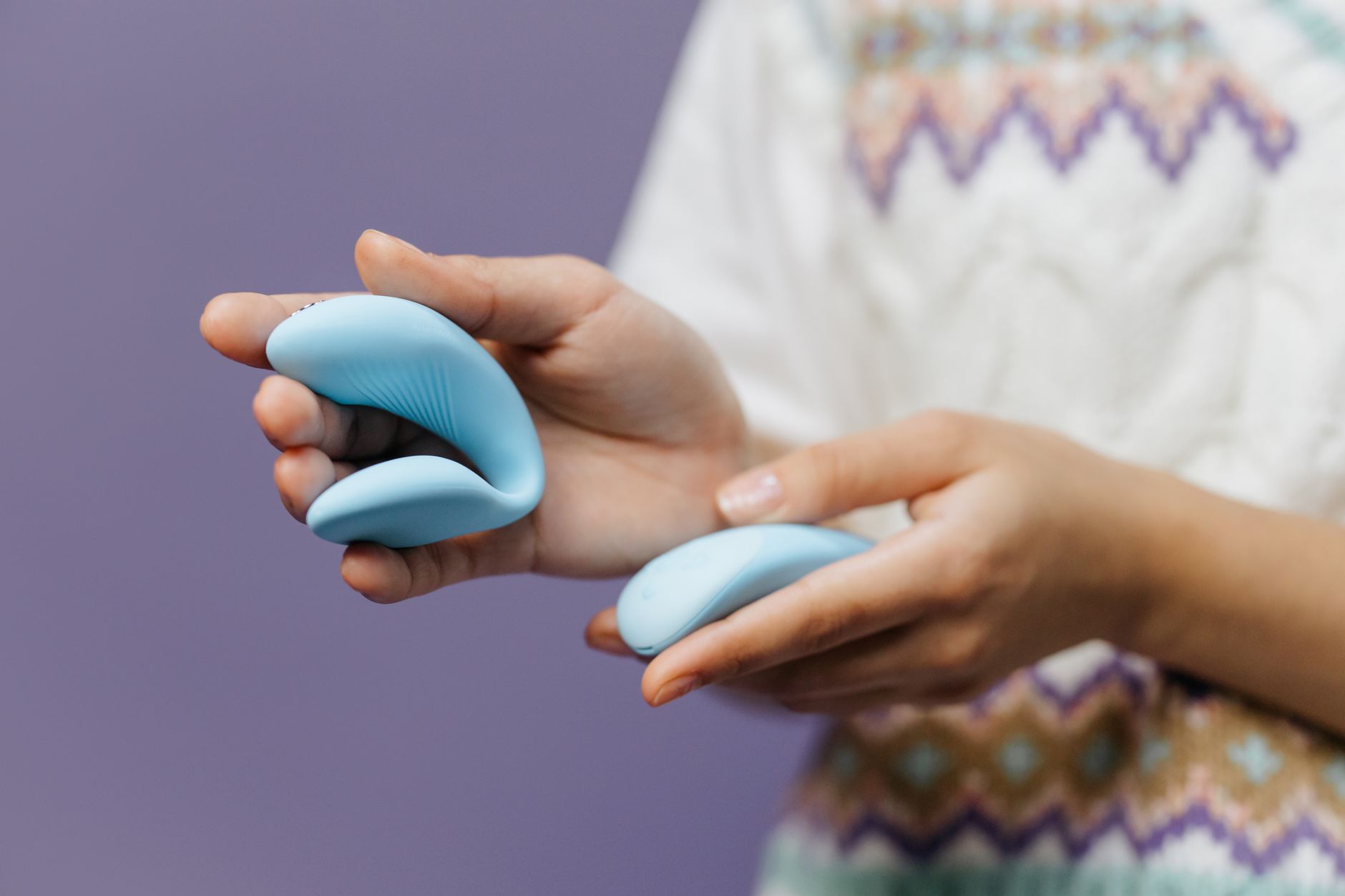
This is where lemon clitoral vibrators come in. Not as a shortcut, but as a tool that actually honors how your nervous system works.
What low arousal thresholds actually mean
Your arousal threshold is basically how much input (mental, physical, or emotional) your nervous system needs before it shifts into the parasympathetic state where pleasure happens. Some people arrive there in five minutes. Others need double that. Neither is normal or abnormal. It's just variation.
Here's what makes low arousal thresholds tricky in practice. Most vibrators are designed for someone with an already-activated nervous system. They start at medium intensity. They work fast. That's fine for someone who gets turned on quickly. For someone who needs a gentler onramp, it can feel jarring. Too much too soon. Which often triggers anxiety, which tanks arousal entirely.
A lemon vibrator's suction-based design changes this equation because it builds sensation differently than friction does. Suction stimulates the nerve clusters without the sharp intensity of traditional vibration. That matters when you're trying to nudge your nervous system gradually from baseline to engaged.
The extended warm-up timeline that actually works
Instead of fighting your body's timeline, design for it. Here's a realistic structure for someone who needs 30-45 minutes of warm-up.
Minutes 0-10: Mental warm-up. Put your phone away. Do something that activates your senses without being sexual yet. Read something flirty. Light touch with a partner. Shower. The goal is shifting attention inward, not hitting high arousal. This might feel slow. It's not. It's necessary.
Minutes 10-20: Body awareness. Touch yourself without the lemon vibrator yet. Foreplay with a partner if applicable. This is where you start to notice physical response. Breathing changes. Blood flow. Sensitivity shifts. You're building the foundation. This is not filler. This is the work.
Minutes 20-35: Lemon vibrator on lowest setting. Start with pattern 1 or 2 on your lemon clitoral vibrator. Not because you're not ready for more, but because you're meeting your body where it is right now, not where it "should" be. Spend this time exploring sensation. What feels good. Where. How the suction rhythm matches your breathing. Don't race toward orgasm. That's not the goal yet. The goal is deeper arousal.
Minutes 35+: Intensity builds if it does. Maybe you adjust to pattern 3 or 4. Maybe you stay where you are. Maybe you want to switch to a partner or a different activity. All of these are fine. The timeline isn't a checklist. It's permission to let pleasure unfold on your schedule.
Why suction works better for slower arousal builds
Traditional vibrators create arousal through repeated friction or percussion. That works well if your nervous system is already primed. If it's not, the intensity can feel overwhelming or even mildly painful. It's like someone yelling when you're trying to concentrate.
Suction stimulation is different. It creates a pulling sensation that engages the clitoral complex more gradually. The lemon vibrator's design means you're not getting pure vibration frequency. You're getting rhythm with space. Intensity with release. That pulsing pattern more closely mirrors the actual nerve firing patterns that happen during natural arousal. So your body reads it as familiar, not jarring.
For people with low arousal thresholds, this is huge. You can use the tool without it creating a mismatch between what your body is ready for and what's being offered. That reduces the friction that kills arousal before it starts.
The partner conversation that needs to happen
If you're with someone, they need to understand that your extended warm-up is not about them or your attraction to them. It's about your nervous system's design. Full stop.
Most of the tension in these situations comes from unstated expectations. Your partner might interpret slow arousal as disinterest. You might interpret impatience as pressure. The whole thing collapses.
Here's what I tell couples. Frame it like this: "My body needs about 30 minutes to fully engage. That's just how I'm wired. It has nothing to do with how I feel about you. It's actually an invitation to slow down together." Then use that time together. Not performing. Not rushing toward an orgasm. Just building arousal slowly.
A lemon vibrator can actually help here because it gives you a shared focal point. Your partner watches you use it. You explain what feels good. They learn your body's timeline. Paradoxically, taking more time often makes sex better for both of you.
What kills arousal faster than anything
Pressure. Clock-watching. Feeling like you're taking too long. The moment you shift into "I should be more turned on by now," your nervous system registers threat and downregulates. Arousal tanks.
One of the kindest things you can do for yourself is remove the timeline entirely on some nights. Use your lemon vibrator with zero goal. Not trying to orgasm. Not trying to reach some intensity threshold. Just exploring sensation for its own sake. Your nervous system relaxes when there's nowhere to get to.
This is radical compared to how most people are taught to think about sex. But it works. When you stop treating arousal as a problem to solve and start treating it as a process to experience, the whole thing shifts.
Building tolerance gradually without desensitization
One concern people raise: if I use a lower intensity for longer, won't I eventually need more intensity to feel anything?
Not necessarily, and here's why. Desensitization happens when you're chasing sensation. It's about escalating to feel the same hit. But if you're using lower intensity as part of a longer arousal arc, you're actually engaging more of your nervous system more fully. You're not numbing yourself. You're deepening sensitivity.
The key is variety. Don't use pattern 1 for 20 minutes every single time. Vary the pressure. Switch to manual touch. Use your lemon vibrator, then switch to a partner's hands, then back. That variation prevents your nervous system from habituating to a single input.
When to bring in additional support
Sometimes low arousal thresholds aren't just about how you're wired. They're also about what's happening in your relationship, your stress levels, your sleep, or even unresolved trauma.
If you notice that your arousal timeline has gotten longer recently, or if you used to be able to get aroused faster and now you can't, that's worth exploring with a therapist or a doctor. Not because something is wrong with you, but because changes in arousal often signal something worth understanding.
A lemon vibrator is a great tool. But it's not a substitute for addressing what might be blocking arousal at a deeper level.
FAQ
Why do some people need longer to get aroused than others?
Arousal threshold is determined by nervous system sensitivity, hormonal baseline, stress levels, and individual wiring. Some people's parasympathetic systems activate quickly with minimal stimulation. Others require sustained, consistent input to shift out of their baseline state. Neither is healthier or more normal. It's variation, not dysfunction.
Can using a lemon clitoral vibrator actually help if I struggle with slow arousal?
Yes, but not as a shortcut. A lemon vibrator's suction design is gentler than traditional vibration, which makes it easier to use during extended warm-up without triggering overwhelm. The key is using it as part of a longer arousal timeline, not trying to compress that timeline using higher intensity.
How do I explain my extended warm-up timeline to a partner without sounding like I'm rejecting them?
Be direct and kind. "My body takes about 30 minutes to fully engage. That's not about you or my attraction. That's just my wiring." Then invite them into that time. Make it collaborative, not transactional. That reframe often turns potential friction into intimacy.
Is extended warm-up the same as low libido?
No. Low arousal threshold is about how long it takes to get turned on, not how much desire you have. You can want sex desperately and still need 45 minutes to feel physically aroused. These are different systems.
Should I feel like I'm taking too long if my warm-up takes 30 minutes?
No. If anything, you're taking the right amount of time for your nervous system. The problem isn't your timeline. It's that most media and most partners are trained to expect arousal to happen faster. That expectation is the thing worth questioning, not your body.
Does using a lemon vibrator on low intensity for a long time lead to desensitization?
Not if you vary your approach. Desensitization happens when you use the same stimulus at the same intensity repeatedly. Mix in manual touch, partner touch, and different patterns. Variation prevents habituation while extending your warm-up timeline honors your nervous system.
The long game
Someone once told me that slow sex is not a problem to solve. It's a feature. The people who need extended warm-up often end up with deeper, more complex orgasms and more consistent arousal once they stop fighting their timeline and start designing for it.
A lemon vibrator works beautifully in that context because it's designed around sensation, not speed. It gives you permission to take the time your body actually needs. And that permission is where pleasure actually lives.