Let's start with the part nobody explains
Grief doesn't just pause your sex life. It erases the architecture of desire. For weeks or months, you're not avoiding sex. Sex isn't even on the map. Your body is too busy processing loss to want much of anything except sleep and numbness.
Then something shifts. Maybe it's been three months. Maybe it's been a year. Suddenly you're aroused again. And instead of relief, many people feel guilty, confused, or even panicked. Does wanting pleasure again mean you're forgetting? Are you being disrespectful to the person you lost? Can your body really just switch back on like nothing happened?
Yes. And no. And here's what actually helps.
Why grief erases desire in the first place
Grief is a full-body event. Cortisol spikes, which tanks testosterone. Your vagus nerve (the nervous system's main highway) gets locked in survival mode. The prefrontal cortex, which handles arousal processing, goes offline. You're not choosing to be numb. Your neurochemistry has literally unplugged itself.
On top of that is the emotional piece. Desire feels frivolous when someone you love is gone. Your brain interprets arousal as a betrayal of grief. That's not weakness. That's actually a sign your brain is protecting you.
But eventually, your body's biochemistry starts to normalize. The cortisol drops. Your prefrontal cortex wakes up. And suddenly you feel a flutter that you haven't felt in months. That jolt of arousal can feel shocking. Disorienting. Maybe even wrong.
The guilt phase is completely normal
This is where things get messy psychologically. If you're grieving a partner who died, returning desire can feel like a betrayal. If you're grieving a relationship ending, arousal might bring up complicated feelings about that person, or anxiety about whether you can ever want someone new.
The impulse is to suppress it. To tell yourself you're not ready, that pleasure is off-limits, that your body should stay in mourning with you.
Here's the truth: desire returning doesn't mean you've moved on. It doesn't mean the loss matters less. It means your body is healing. Your nervous system is finding ground again. Pleasure isn't disrespectful to grief. They can coexist.
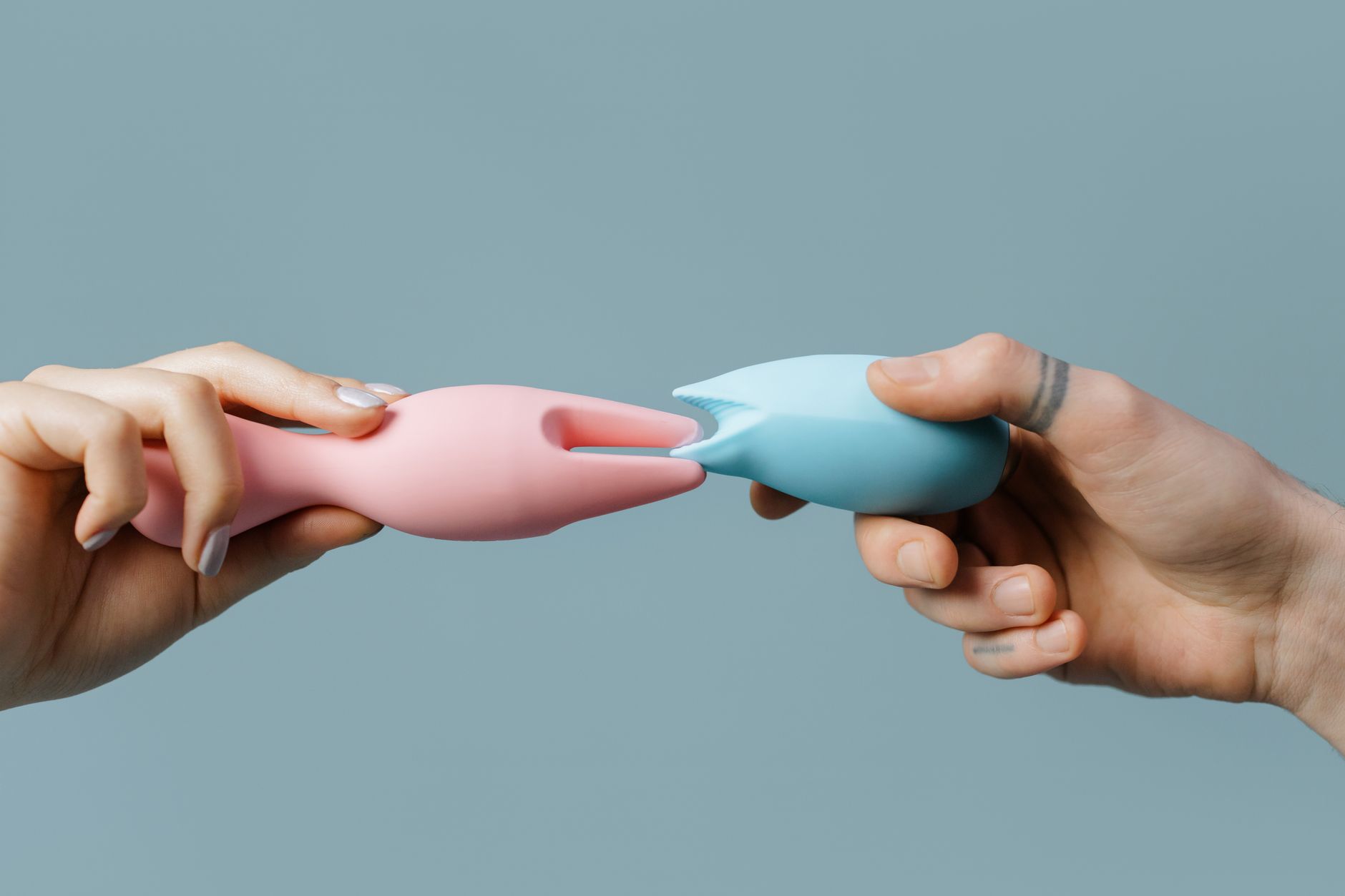
Many of my clients find that rebuilding solo pleasure first, with something like a lemon clitoral vibrator, is less emotionally loaded than partnered sex. You're not navigating another person's expectations or feelings. You're just reconnecting with your own body.
Why lemon vibrators work when pleasure feels unfamiliar
When grief loosens its grip, your body often feels like someone else's. Sensation can be muted. Your clitoris might feel less responsive. You might get aroused more slowly, or the intensity might feel different.
A lemon clitoral vibrator uses air-suction technology instead of traditional vibration, which means it stimulates nerves gently without requiring the kind of direct, intense friction that can feel uncomfortable when tissue sensitivity has shifted. The suction mimics the gentle building of natural arousal, which can feel less jarring when you're relearning pleasure.
The lemon vibrator is also small, discreet, and intuitive. You don't have to think too hard about technique. That matters when your brain is still processing grief. You want tools that work with your body, not against it.
Practical framework for rediscovering pleasure
Start solo, not coupled. Pressure from a partner (even well-meaning support) can make grief-tinged arousal feel more complicated. Solo exploration removes that variable. You get to relearn your body on your schedule.
Budget for longer warm-up time. Grief-recovery arousal doesn't have the same fast-track physiology as stress-free pleasure. You might need 20-30 minutes of relaxation or gentle stimulation before arousal builds. That's not a flaw. That's just where you are right now.
Low intensity first. The lemon vibrator has multiple settings. Start on setting 1 or 2. Let your body remember what pleasure feels like without overwhelming it.
Expect unpredictability. Some sessions you'll feel nothing. Some days arousal will feel sharp and intense out of nowhere. Both are grief-recovery normal. This inconsistency doesn't mean something's wrong. It means your nervous system is still recalibrating.
Pair pleasure with safety cues. If you're anxious about feeling pleasure (guilt, concern about being disrespectful, fear of what it means), create a deliberate transition. Light a candle. Play music that's comforting, not seductive. Take three deep breaths. Tell yourself explicitly: "My pleasure honors the full life I've lived, including loss."
When to involve a partner
If you're in a relationship and your partner has also been grieving, remember that their timeline for desire returning might be completely different from yours. That's not rejection. That's grief being individual.
The conversation isn't "I want sex again." It's "I'm starting to feel arousal. I'm not sure what that means for us yet. Can we talk about it?" That opens space instead of creating pressure.
Many couples find that rebuilding physical intimacy works better when they approach it as a slow, intentional exploration rather than a return to how things were. The lemon vibrator, used together, can be part of that conversation. It's a tool you're both learning with, not a replacement for partnership.
The timeline confusion
Some people's libido comes back suddenly, almost aggressively. Others have it trickle back over months. There is no "correct" timeline. I've worked with clients who felt aroused again within weeks of losing a parent and felt ashamed of that speed. I've also worked with clients who didn't feel sexual desire for two years after a relationship ended.
Both are fine. Grief isn't linear. Pleasure returning isn't linear either. You might have a week of strong arousal, then two weeks of nothing, then it floods back. That's not backsliding. That's your nervous system learning to trust stability again.
The lemon vibrator is useful precisely because it meets you wherever you are on any given day. Low desire? Start on setting 1. High desire? Explore the full range. No desire? You don't use it. There's no failure state.
What unexpected arousal might be telling you
Sometimes the return of sexual desire is straightforward biology. Your cortisol normalized. Your body is healing. You're aroused.
Other times, arousal returns and brings up complicated feelings. You might realize your grief has shifted. That you're ready to reconnect with your own pleasure, even if you're not ready for partnership. That you're angry at the person you lost. That you're afraid of wanting someone new.
Listen to that. Pleasure isn't just sensation. It's also information. If you feel arousal mixed with anxiety, sadness, or confusion, that's worth exploring with a therapist, not just a tool.
But if arousal comes with relief and curiosity, that's often a sign you're moving forward. Not away from grief. Alongside it.
Rebuilding pleasure is rebuilding resilience
Honestly, rediscovering desire after grief is about more than sex. It's your body telling you it's ready to feel again. That you trust yourself again. That life, messy and painful as it is, is still worth inhabiting fully.
The lemon clitoral vibrator is just the tool. The real work is giving yourself permission to want pleasure again without guilt, without rushing, and without needing it to mean anything other than what it is: a moment where you feel good in your own body.
That matters. Your pleasure matters. Even after loss.
People also ask
Is it normal to feel guilty about sexual desire after losing someone close?
Completely normal. Guilt is one of the most common grief responses when desire returns. Your brain is trying to protect your loyalty to the person you lost, as if pleasure somehow dishonors them. It doesn't. Grief and pleasure can exist in the same body at the same time. Many cultures and therapists actually see the return of desire as a healthy sign that you're integrating the loss rather than being consumed by it. If guilt feels overwhelming, talking to a grief counselor can help separate the biological signals (arousal is happening) from the emotional story you're telling yourself about what that means.
How long does it typically take for libido to return after grief?
There's no standard timeline. Some people feel arousal returning within weeks. Others don't feel sexual desire again for a year or more. Factors like the type of loss (death versus breakup), your relationship to the person, your age, hormones, and previous sexual trauma all affect the timeline. The return of desire isn't a measure of how much you cared or how well you're grieving. It's neurochemistry finding its way back to baseline. If months have passed and you still feel completely numb, that's worth discussing with a therapist or doctor, especially if numbness extends beyond sexuality.
Can I use lemon vibrators while grieving, or is that disrespectful?
Absolutely yes. Your pleasure is never disrespectful. If you're grieving a partner, using a tool to reconnect with your own body is actually a healthy part of rebuilding your sense of self after loss. If you're grieving a relationship ending, solo pleasure helps you remember that your body belongs to you. Some people find comfort in self-pleasure during grief because it requires nothing from anyone else. It's entirely within your control. There's no "right" way to grieve, and that includes no restriction on pleasure.
What if arousal feels physically different after grief?
It very often does. Grief changes your nervous system temporarily. Arousal might build slower, feel less intense, or come and go unpredictably. Your clitoris might feel less responsive. Lubrication might be different. All of this is normal grief-recovery physiology, not a sign that something's broken. The lemon clitoral vibrator is gentle enough to work with these changes rather than against them. If physical sensations feel significantly different months after the acute grief phase, it's worth checking with a gynecologist to rule out hormonal or physical changes. But most often, as your nervous system recalibrates, sensation normalizes too.
Should I tell my partner when my libido returns after grief?
Yes, eventually. But timing matters. If you're still processing acute grief, you don't have to announce it immediately. Some people benefit from exploring solo first, with a tool like a lemon vibrator, before bringing a partner back into that space. When you do talk about it, frame it as information, not a demand. "I've been noticing arousal returning. I'm not sure what that means for us yet, but I wanted to mention it." That opens conversation without pressure. Your partner might need more time to feel desire returning. That's okay. Grief timelines rarely align perfectly.
Is there a risk of using pleasure as avoidance after grief?
Possible, yes. Some people use sexual pleasure compulsively to avoid sitting with grief. That's something to notice with honesty. The difference is usually in how it feels. Healthy pleasure-seeking feels grounding and reconnecting. Avoidant pleasure-seeking feels frantic or numb. If you're using the lemon vibrator three times a day and still feel emotionally unmoored, that might be worth exploring in therapy. But moderate, regular pleasure as part of grief recovery? That's healing, not avoidance.
You deserve to feel good again
Grief changes you. It doesn't define you. And your body's readiness to feel pleasure again isn't a timeline for being "over it." It's just your nervous system remembering that life includes sensation, joy, and reconnection, alongside the loss.
If you're navigating this confusing terrain right now, be patient with yourself. Your body knows what it's doing. The lemon vibrator is there when you're ready. And if you have questions about grief, intimacy, or rebuilding connection with yourself or a partner, that's what we're here for. Reach out anytime at /contact.