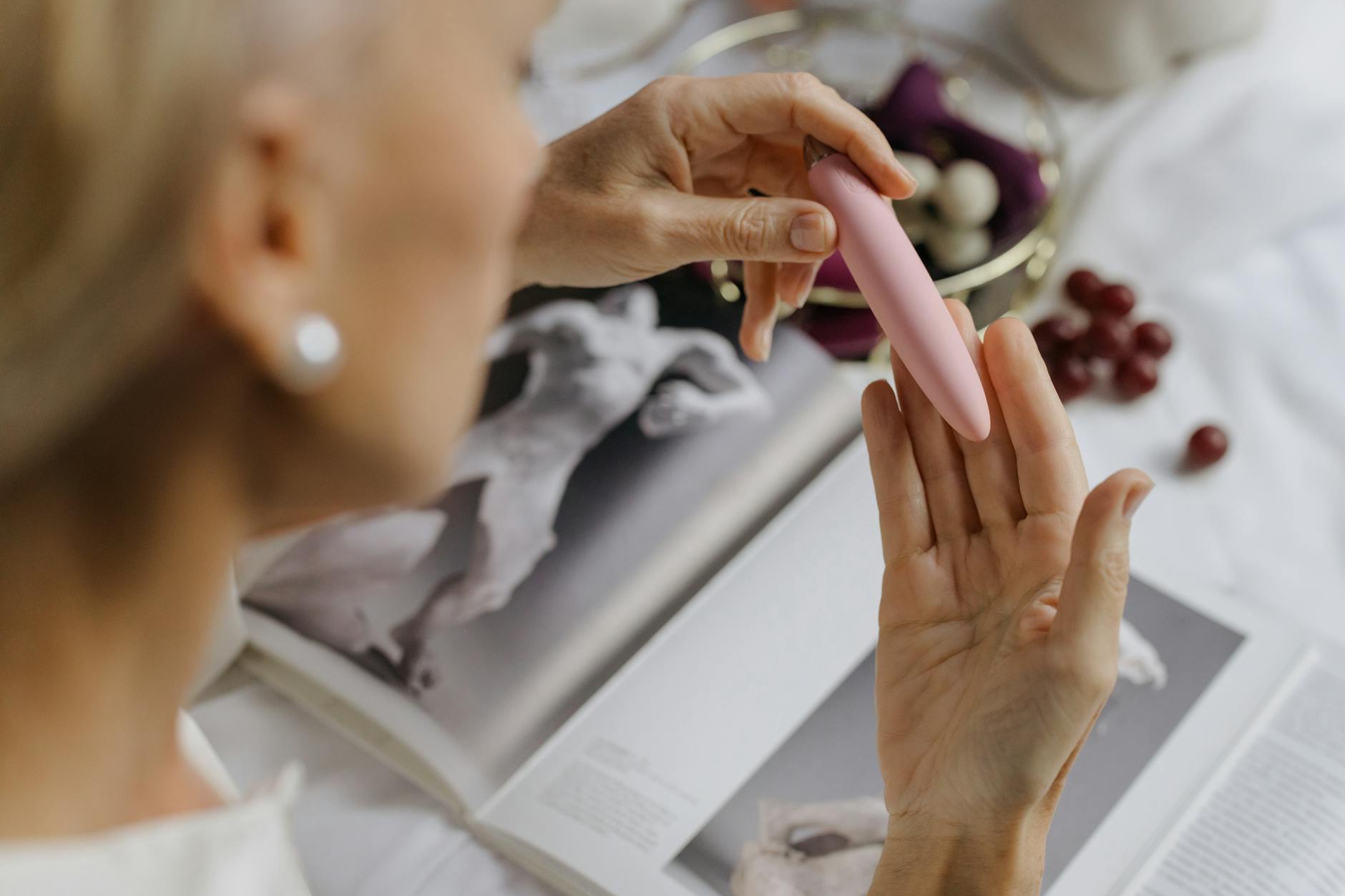
The thing nobody says out loud
When your partner develops erectile dysfunction, the first thing that happens isn't medical. It's emotional. He starts apologizing. You start reassuring him it's fine. Both of you stop initiating anything, worried you'll trigger another cycle of disappointment. The physical problem becomes a relationship problem almost overnight.
Here's what I've seen in my practice: the couples who recover fastest are the ones who stop trying to "fix" the ED and start building intimacy around something else entirely. That's where lemon vibrators enter the picture. Not as a workaround. As a complete reframe.
Why ED changes the dynamic so quickly
EDs impacts more than erections. It tanks confidence, triggers shame, and creates this weird feedback loop where anxiety about performance makes the problem worse. Your partner becomes hyperaware of his body's response, which actually prevents it from responding naturally. Meanwhile, you're caught between wanting to be supportive and wanting to feel desired. Both of those things become harder to access.
The relationship mechanics shift too. Sex becomes goal-oriented (will it happen or won't it?), which kills spontaneity. Foreplay shrinks because everything feels like it's building to something that might not occur. Affection and touch get loaded with pressure they were never meant to carry.
What's missing: a lane where pleasure exists without performance. Where your body can be the focus. Where your partner can participate without his body being on trial.
How lemon clitoral vibrators reset the equation
A lemon vibrator (or any quality clitoral vibrator) fundamentally changes what sex can be during an ED phase. Here's why it matters.
First: it removes the goal. When penetration or his arousal is the finish line, everything builds toward that single outcome. A lemon vibrator creates a completely different finish line. Your pleasure. Full stop. This is genuinely radical in relationships where ED has made intimacy feel like a test he might fail.
Second: it gives him a different role. Instead of being the person whose body has to perform, he becomes the person orchestrating yours. That's not semantics. For a lot of partners with ED, this shift is restorative. He can touch you, direct the vibrator, watch you respond, feel wanted and capable again. Not in spite of his ED, but in parallel to it.
Third: it builds a new intimacy template. Right now, your sexual repertoire probably looks like: foreplay, attempt intercourse, manage disappointment. A lemon vibrator expands that map. Foreplay and vibrator play become the main event. Intercourse becomes optional, not mandatory. He might join in, might not. Either way, you both finish satisfied.
A practical framework for starting
Let's be direct: you can't bring this up as a solution to his ED. That lands like criticism. Instead, frame it as something you want for you.
The opener. "I've been thinking about trying something that would feel good for me. Would you want to explore that together?" Not "I think we should use a vibrator to work around your erectile dysfunction." One opens a door. The other makes him feel broken.
The setup. Choose a low-pressure moment. Not right before sex, not when you're both stressed. A quiet evening, a weekend morning. Introduce the lemon vibrator the way you'd introduce any new tool. Show him how it works (patterns, intensity), let him hold it, make it familiar and unsexy before you make it sexy.
The integration. Start with foreplay. He touches you, you use the vibrator. You alternate. You guide his hand while using it. You direct him ("slower," "that angle") which gives him specific feedback that has nothing to do with his own arousal. This is huge. He gets to succeed at something.
The permission. Make it clear that he doesn't have to be hard, he doesn't have to stay hard, he doesn't have to participate in any particular way. This removes the pressure that's been crushing him. Many partners find that when the performance requirement drops, their ED actually improves. But that's a side effect, not the goal.
What changes emotionally
Over the past fifteen years of working with couples navigating ED, I've watched this pattern repeat: when a lemon clitoral vibrator becomes part of the intimate landscape, the shame starts to lift. Not because the vibrator fixed the erectile dysfunction. But because the couple stopped making his penis the centerpiece of their sex life.
That shift is everything. You move from "will he be able to?" to "what do we both want?" His body isn't under a microscope anymore. Your pleasure gets proper attention. He gets to feel like a good partner because you're finishing satisfied, which is quantifiably true. The ED is still there, but it's no longer the plot of the story.
Many partners also report that using a lemon vibrator together rebuilds desire for both of them. After months of tension and avoidance, actually having good sex again (even if it looks different) reminds you both why you wanted each other in the first place. That matters more than any medical fix.
The medical piece still exists
None of this replaces a conversation with a doctor. ED has medical causes (cardiovascular, hormonal, medication side effects) and medical treatments (medications, therapy, lifestyle changes) that work. I'm not here to tell you those aren't important.
But I'm also telling you that while he's pursuing those conversations, your intimate life doesn't have to be on pause. A lemon vibrator is not a substitute for seeing a doctor. It's a way to keep the relationship fed while medical stuff gets sorted.
If his ED is severe or sudden, definitely see a GP. If it's persistent, push for referral to a urologist or men's sexual health specialist. But in parallel, you can be rebuilding pleasure together.
The conversation with your partner
If you're reading this thinking "but how do I even bring this up without hurting his feelings," you're right to be cautious. Here's what works:
"I miss you. I miss us. I want to find ways we can both feel good that don't require things to work a certain way. I found something I'd like to try. It's for me, but I'd like you involved. Are you open to that?" That's not criticism. That's invitation.
If he resists, don't push. But most partners are relieved. ED has been making them feel like failures. An invitation to pleasure without performance expectations can feel like permission to breathe again.
When this actually helps the ED itself
Here's something I see regularly: once ED stops being the center of attention, it often improves. Not always. But frequently.
Why? Because erectile dysfunction is often amplified by anxiety. A man's nervous system is in fight-or-flight. Blood can't flow to the right places. Once he's no longer terrified of failing, his body sometimes remembers how to respond naturally. A lemon vibrator removes the performance pressure that was making his anxiety worse.
So using a lemon clitoral vibrator together might actually help his ED recover. But even if it doesn't, you're both having better sex right now, which is its own victory.
The long view
Eectile dysfunction doesn't have to be a wall in a relationship. It's a turn in the road. The couples I work with who come out strongest on the other side are the ones who stopped trying to get back to the sex they had before. They built something new.
A lemon vibrator is just a tool. But it's a tool that says: your pleasure matters. We both deserve good sex. His body doesn't define us. We can adapt. That message, repeated through your intimate life, changes everything.
Your partner struggling with ED is real. The relationship impact is real. But so is the possibility that you rebuild something stronger than what ED interrupted. Start there.
People also ask
How do I know if my partner is ready to use a lemon vibrator together?
Readiness often looks like him being willing to talk about ED at all. If he's still in total denial or shame, pushing a vibrator into the conversation will feel like pressure. But if he's acknowledged the problem exists, he's usually ready to explore alternatives. Start with the conversation, not the toy. His answer to "would you be open to trying something different together?" tells you everything. Many partners are relieved by the suggestion.
Can using a lemon vibrator actually improve erectile dysfunction?
It can help indirectly. By removing performance pressure and rebuilding positive sexual experiences, anxiety often drops, which can improve ED. But it's not a medical treatment. If ED is caused by cardiovascular issues, hormonal imbalance, or medication side effects, he needs to see a doctor. A lemon clitoral vibrator is part of a fuller solution, not the whole solution.
What if my partner feels emasculated by the vibrator?
That's real. Frame it differently. Don't say "we need this because you can't." Say "I want this for me, and I want you involved in my pleasure." Make him the architect of your experience, not a replacement component. Let him hold the vibrator. Let him control the intensity. Let him watch you respond to something he's directing. That's powerful and participatory, not emasculating.
Should we still try to have intercourse if he has ED?
That's up to both of you. Some couples find that removing the pressure to have intercourse actually makes intercourse possible again over time. Others find that intercourse becomes optional, and that's perfectly fine. The key is that nobody's forcing anything. If he's interested and able, great. If not, you've got other ways to connect. The goal is pleasure, not a specific act.
Is it weird to use a lemon vibrator if we haven't used toys before?
Not at all. Most couples haven't used toys before their first one. A lemon vibrator is actually a great entry point because it's small, intuitive, and focused on something straightforward: your pleasure. There's no learning curve. Introduce it the way you'd introduce anything new. Make it normal. Use it. Enjoy it. Move forward.
How often should we use a lemon vibrator if he has ED?
As often as you both want. There's no prescription. Some couples use it every time they're intimate. Some use it occasionally. The point isn't frequency. It's that you have an option that works when other things feel harder. Let desire and circumstance guide it, not a rule.
If you're navigating ED in your relationship and want to explore how a quality clitoral vibrator might fit into your intimate life, a marriage coach can help you both find language and frameworks that work. Pleasure is possible. It just might look different than you expected, and that's not a loss. That's adaptation.