Here's the truth nobody says out loud
Introducing a lemon vibrator or any clitoral vibrator into partnered sex doesn't mean your partner isn't enough. It means you both want more. And that's not weakness or a sign of trouble—that's actually the definition of a healthy sexual partnership that keeps evolving.
I work with couples all the time who hold back on this conversation because of shame or fear. They assume a toy signals dissatisfaction. The opposite is usually true. Couples who talk openly about pleasure, boundaries, and what they want tend to have deeper intimacy overall. Not just sexually, but emotionally too.
Let me walk you through how to have this conversation, how to introduce a lemon sucker into your routine, and how to make it work for both of you.
Why the conversation matters more than the toy
Before you even think about which lemon vibrator to buy, you need to talk about why you want one and what you both hope it will add to your sex life. This conversation is where most couples stumble—and it's completely fixable.
The worst approach: ambushing your partner with a toy during sex or saying "I need this because I can't finish otherwise." The subtext they hear is rejection. Even if that's not what you mean, that's what lands.
The better approach: pick a calm moment outside the bedroom. Not during sex, not right before bed. Say something like "I've been thinking about our sex life, and I want us to explore something new together. There's this thing I'd like to try that I think could feel really good for both of us. Can we talk about it?" That one line reframes it from solo want to shared curiosity.
What you actually need to say
Be specific about what you want and why. "I want to try using a lemon vibrator during sex because I think it could help me orgasm more reliably" is a factual statement. "I feel disconnected from you" is a relationship problem that a toy cannot fix. Know which one you're naming.
If you're introducing this because you've been faking orgasms or you've felt stuck, now is the time to say that too. It might sting for a second, but partners would rather know the truth and have the chance to adjust than discover five years later that you've been checking out.
Then ask your partner what they're concerned about. Listen without defending. Common worries: Am I not enough? Will you want me less? Does this mean you're not attracted to me? Are you cheating on me? (The last one is rare but does come up in some relationships.)
Answer these directly. "You are absolutely enough. I want to explore this WITH you, not without you. This is about expanding what we do together, not replacing you."
Choosing the right clitoral vibrator for couples play
Not all vibrators work equally well during partnered sex. Why lemon vibrators work better for sensitive areas is one angle, but there are practical partnered-specific considerations too.
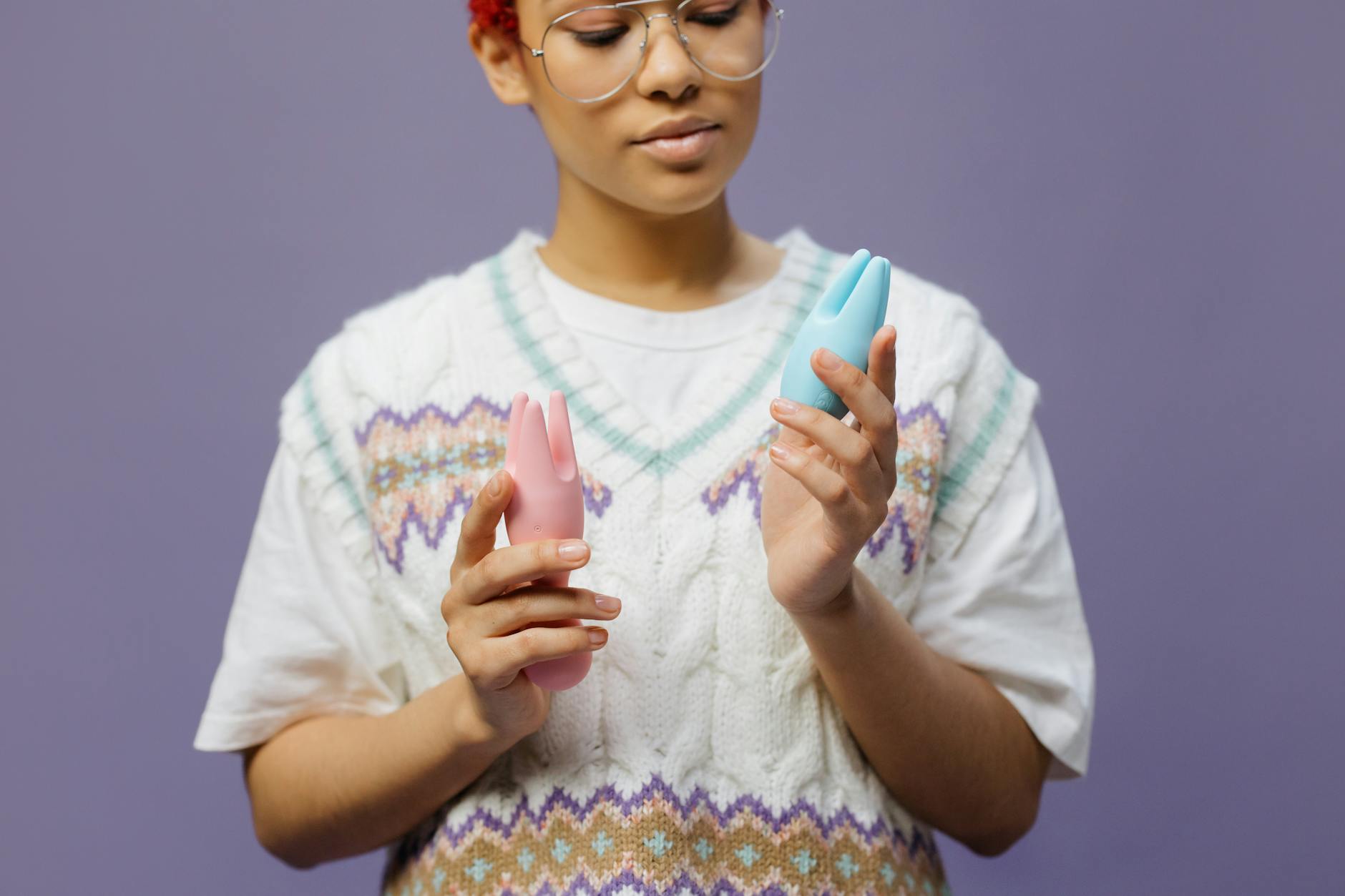
You want something small and maneuverable—not something your partner has to hold with both hands while you both try to get into position. The lemon-shaped clitoral vibrator design is actually ideal for couples play because it's compact, has an intuitive grip, and sits flush against your body without getting in the way of your partner.
You also want quieter, not because noise is inherently bad, but because it's less distracting for your partner. A roaring vibrator can make it hard for them to stay in their own arousal and connected to you.
Texture matters too. Silicone is non-porous, easy to clean, and warms up to body temperature quickly—all things that matter when someone else is about to use it on you.
How to actually use it during sex: five scenarios
Scenario 1: During oral sex. Your partner uses the lemon vibrator on you while they're going down on you. They hold it, they control the intensity, and you can relax into sensation without worrying about technique. This is often the easiest entry point because roles are already clear.
Scenario 2: During penetration. You hold the vibrator on your clitoris while your partner is inside you. This is classic and it works—the vibration stays localized to your clitoris while you're getting internal stimulation. Your partner gets to see your face and stay engaged.
Scenario 3: Your partner uses it on you beforehand. Use the lemon sucker together for 10 to 15 minutes before other sex starts. This brings you closer to orgasm before penetration begins, which often makes the whole experience feel sharper and more intense. Some people call this "pre-gaming." I call it smart strategy.
Scenario 4: After penetration. Your partner pulls out and uses the vibrator on you while you're still close, still connected, still in rhythm together. This can trigger orgasms that feel especially deep because you're not switching gears entirely—you're staying in the same moment.
Scenario 5: Mutual stimulation. Both of you use vibrators during sex. You on yourself, them on themselves, bodies touching. This requires zero performance and gives you both permission to chase your own sensation. It's freeing and often surprisingly connecting.
Managing the mental stuff
Here's what I see with couples: the toy works great physically. Then the mind kicks in. Your partner feels less needed. You feel exposed. Suddenly the whole thing feels performative instead of intimate.
This is completely normal and fixable. The key is talking during and after, not just before.
During: if things feel clinical or disconnected, pause. Kiss. Make eye contact. Remember you're doing this together. A lemon vibrator is a prop, not a substitute for attention.
After: ask your partner how they felt. Did they enjoy it? Did they feel turned on watching you? What would they change? This isn't a survey—it's an intimate debrief. You're checking in with each other the way you would after any new experience.
Many couples find that this conversation—"How did that feel for you? What did you like?"—becomes a gateway to deeper emotional intimacy too. Pleasure conversations open doors that stay closed when we only talk about logistics.
Common hiccups and how to navigate them
"I didn't finish anyway." Then you figure out why, together. Maybe you need more time, different pressure, or a different rhythm. Maybe you need your partner to use their hand instead. The vibrator is a tool, not a magic fix. Why lemon vibrators take longer to work for some people breaks this down in detail.
"It's too intense." Start on a lower setting. Most lemon vibrators have multiple patterns and intensities. Begin where you think is comfortable, then back it down one setting. Sensation is personal. Your partner might love what feels overwhelming to you.
"It's hard to coordinate." Yes. It takes practice. You might feel awkward the first few times. That's completely normal. Have a laugh about it. Awkwardness in bed usually means you're trying something new, which is good.
"My partner got turned on watching me, but I felt self-conscious." This is actually a beautiful moment. Your partner's arousal at your pleasure is a gift. Let yourself receive it. You don't have to perform—just exist in sensation and let them enjoy the show. You deserve to be desired, not just tolerated.
The real thing about couples and toys
I've worked with hundreds of couples over decades. The ones with the strongest sexual connections aren't the ones with the most toys. They're the ones who communicate, who stay curious about each other's pleasure, and who aren't afraid to ask for what they want or admit what isn't working.
A lemon vibrator or any clitoral vibrator is just a conversation starter with your body in it. It gives you a concrete thing to talk about. "Let's try this" becomes "Let's try this together," which becomes "I want to know what feels good for you," which becomes "I see you and I care about your pleasure."
That's the real win.
Frequently asked questions
Can using a lemon vibrator make my partner feel inadequate?
Not if you frame it right. If you present it as something you both get to explore together instead of a criticism of their technique, most partners respond positively. The couples who struggle with this are the ones who skip the conversation and just show up with a toy. Have the talk first. The toy second.
Should my partner use the vibrator on me or should I use it on myself during sex?
Both work, but they create different dynamics. When your partner holds the lemon vibrator or lemon clitoral sucker, they stay engaged and in control of sensation. When you hold it, you get to focus on what feels good without worrying about their experience. Try both and see what feels more intimate to each of you.
How do I know if my partner is actually into this or just going along with it?
Ask them directly outside the bedroom. "Did that feel good for you? Do you want to try again?" If they're hesitant, ask what made them uncomfortable. Maybe they felt like a bystander. Maybe the texture bothered them. Maybe they need more time to adjust to the idea. There's always an adjustment period. Give them space to say yes or no without pressure.
Is it normal for me to orgasm faster or harder with a vibrator when my partner is inside me?
Completely normal. The combined stimulation of internal and clitoral sensation often creates more intense orgasms than either one alone. That intensity can be something you both enjoy. The key is making sure your partner knows this isn't about them—it's about adding a layer of sensation.
What if I want to use a lemon vibrator but my partner absolutely refuses?
Then you have a bigger conversation about why. Is it insecurity? Discomfort? Values? A need for control? Those are relationship issues, not toy issues. You might benefit from working with a couples therapist to explore what's underneath the no. Desire mismatches can be worked through if both people are willing.
Can we use a lemon vibrator during long-distance video sex?
Absolutely. Some couples actually prefer this because you both have complete control over your own sensation and you're watching each other. It can feel more intimate in some ways because you're fully present in your own pleasure. The visual connection matters here—make sure the camera angle works for both of you.
What comes next
You've had the conversation. You've picked a lemon vibrator or clitoral vibrator. You've tried it once or twice. Now what?
Keep talking. Keep experimenting. How to use lemon vibrators with a partner goes deeper into the communication side if you need more guidance.
Your sexual relationship isn't static. It evolves with you. What works at 25 might not work at 40. What felt risky five years ago might feel routine now. Staying curious together—about pleasure, about each other's bodies, about what brings you closer—is how couples stay connected long term.
A lemon sucker is just the beginning.