Here's what nobody tells you about long-distance intimacy
When your partner works nights or travels for weeks, the usual rhythms of physical connection get disrupted. You're navigating different time zones, exhaustion, mismatched libidos born from stress rather than desire. And somewhere in the middle of all that, the intimacy that once felt easy starts to feel like something you have to schedule. Which is fair. It's also incredibly common.
What many couples don't realize is that clitoral vibrators like lemon suction toys aren't just solo tools. They're a language you can speak together, even across distance. They're a way to say "I'm still thinking about you" without waiting for the moment when you're both rested and in the same room.
Why distance breaks pleasure differently than you'd expect
The obvious issue is absence. Less time together means fewer opportunities for sex. But that's not actually the friction point for most couples. The real problem is psychological.
When your partner is gone, pleasure often feels lonely. You might orgasm, but there's a flatness to it because the person you want to share it with isn't there. Desire also shrinks when you're managing a relationship mostly through text and video. You lose the casual physical affection that keeps arousal simmering in the background. A hand on your back. A kiss when neither of you is performing. That absence is what kills desire, not the distance itself.
There's also the practical reality: when your partner works nights or early mornings, you're on opposite schedules. By the time they're available, you might be exhausted. By the time you're in the mood, they're asleep. This isn't lack of love. It's logistics.
How lemon vibrators reframe pleasure in a long-distance dynamic
Let me be direct. Using a clitoral vibrator alone, in your own space, can feel disconnected from your relationship. The goal here is to make it feel like part of your connection, not separate from it.
There are three ways to approach this.
First: the shared experience. You're both awake, both willing, but in different locations. You can be on a video call or FaceTime while you use a lemon vibrator. Your partner watches. They might be touching themselves. They might just be present. The point is you're experiencing pleasure together, in real time, even though you're not in the same room. This isn't voyeurism. It's intimacy. It's "I want to see you feel good," which is one of the most basic human connections.
Second: the asynchronous intimacy. Your schedules don't align. So you record a voice memo describing what you're thinking about, what you want, what you'd do if they were there. You send it when they're at work. They listen during their break. Later, they send you a response. You're not having sex together, but you're building anticipation and connection across the gap. This works surprisingly well because it requires intention. You have to think about them to make the recording. They have to think about you to respond.
Third: the boundary preservation. Some couples find that the pressure to perform sexually, even remotely, makes things worse. If that's you, clitoral vibrators can still help. You use one alone, for your own pleasure, without the expectation of sharing it. This is self-care. But you tell your partner about it. You say, "I'm taking care of myself tonight." This keeps you connected (transparency) while removing performance pressure. Your pleasure becomes something you're doing for the relationship, not something you're obligated to produce.
Setting up the practical foundation
If you're going to use lemon vibrators as a couple across distance, a few logistics matter.
Privacy is non-negotiable. If you have kids, roommates, or paper-thin walls, you need a clear signal that this time is yours. A locked door. Headphones in. Your partner understanding that if you say "I'm taking an hour," they don't interrupt. Long-distance couples sometimes lose track of this because so much of their intimacy is already happening in snatched moments. Reclaim a space that's fully yours.
Schedule it loosely. "Whenever we both have energy" almost never happens. Instead, pick a day or time window. Tuesday nights after the kids sleep. Saturday morning before errands. Sunday video call at 8 p.m. This isn't romantic. It's also the thing that actually makes it happen. Spontaneity is a luxury of people in the same house.
Communication about what you both want. Before you use a lemon vibrator together remotely, talk about what that actually means. Does your partner want to watch? Listen? Talk you through it? Do you want feedback or just presence? Are you both comfortable with video, or would you rather phone or text? This conversation feels awkward. Do it anyway. It prevents the moment where one person feels exposed and the other feels shut out.
One thing I've noticed with couples navigating travel or shift work is that they often assume they know what their partner wants. "They're probably too tired." "They probably think this is weird." Maybe. Maybe not. Ask.
The emotional shift that matters most
Here's what changes when couples start using a lemon clitoral vibrator as a shared practice, even across distance.
It stops feeling like a substitute for "real" sex. You're not pretending. You're actually having intimacy, just a different form. Your partner gets to see you in a vulnerable, pleasured state. You get to feel desired from far away. That matters differently than just having an orgasm.
It also breaks the myth that sex is something that happens at a specific time, in a specific way, with specific people in a specific location. Pleasure becomes something you can access together even when the logistics are terrible. Which, in a long-distance or shift-work relationship, is almost always.

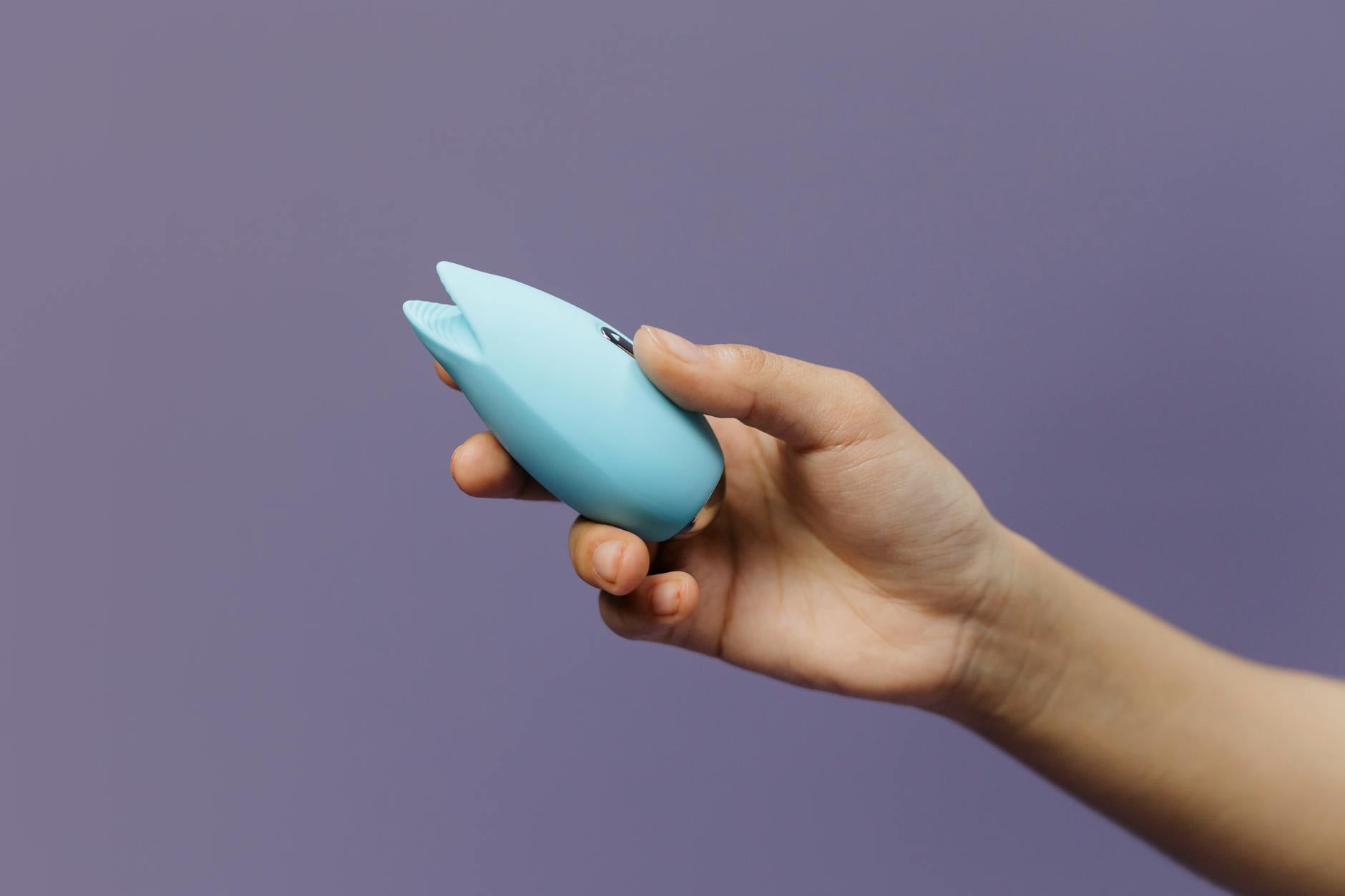
Photo by IFONNX Toys on Pexels
Staying connected between the big moments
Physical intimacy isn't constant, even in couples who are together. But emotional intimacy can be. Using a lemon vibrator or other clitoral toy becomes a touchstone. It's a way to say, "My pleasure matters, and you're part of that." It's also a way to remember that your partner thinks about you sexually, even when they're in another time zone.
Many long-distance couples report that building this practice actually improves their in-person time when they finally reunite. Why? Because you've been thinking about each other in this way. You've been vulnerable and open. You're not rusty. You've already had the conversation about what you want. So when you do have time together, it's not awkward or pressured. It's a continuation of something you've been building.
For couples managing shift work, the benefit is slightly different. You're using a lemon vibrator or clitoral toy to claim time as yours, to stay connected to your own pleasure and to each other, even when the 9-to-5 isn't cooperating. This is important. Over years, shift work can erode intimacy because you stop trying. A simple tool that helps you reconnect, even briefly, matters more than you'd think.
When this approach needs adjustment
Some couples find that any form of remote intimacy feels performative or alienating. That's real information. Don't push it. The alternative is to focus on the in-person time you do have. Make it count. Prioritize presence and pleasure when you're together rather than trying to maintain a sexual connection across the gap.
Other couples struggle with the emotional weight of long-distance sex. They feel sad or resentful instead of connected. Again, that's worth paying attention to. It might mean you need to address the underlying relationship issue ("Do we actually want to do this long-distance thing?") before you can make the intimacy part work.
If you're using a lemon vibrator or similar clitoral toy and it's not feeling good, stop. There's no prize for forcing sexual connection. What matters is that you're both willing and that it actually brings you closer.
FAQs: Distance, desire, and pleasure
Is it weird if I use a vibrator while my partner watches on video?
Not even slightly. Plenty of couples find this incredibly intimate because it requires trust and presence from both people. Your partner gets to see you in a moment of real pleasure. You get to feel desired. If it feels weird at first, that usually passes once you've done it once or twice.
What if my partner feels insecure about me using a vibrator without them?
This is worth a direct conversation. Some partners worry that a vibrator means they're not enough, which isn't how bodies work. A lemon clitoral vibrator creates a specific kind of sensation that hands don't. It's not better or worse. It's different. You might frame it as, "This isn't about you. This is about me taking care of my own pleasure while you're away." If the insecurity persists, that's usually pointing at something deeper in the relationship that might be worth exploring with a counselor.
Can we use a clitoral vibrator together when we finally see each other in person?
Absolutely. Some couples use a lemon vibrator to warm up before penetrative sex. Others use it as the main event. It's just a tool. The key is that both people are enthusiastic about it. If one person feels obligated, it stops being fun.
How often should we be having remote intimacy if we're long-distance?
There's no rule. Some couples do it weekly. Others do it monthly or whenever the schedules align. What matters is that it feels sustainable and that both of you actually want it. Forced sexual connection is worse than no sexual connection.
What if we're on opposite time zones and can never be awake at the same time?
That's when asynchronous intimacy gets really useful. You record voice memos or send texts describing what you're thinking about or what you did. Your partner responds when they wake up. You're building connection and anticipation without needing real-time overlap. It's slower, but it works.
Does using a lemon vibrator long-distance actually help the relationship?
It can, if both people want it. It keeps you thinking about each other sexually. It maintains a form of physical connection. It's also a way to practice communication and vulnerability. But it's not a solution to deeper relationship problems. If the distance is making you feel disconnected emotionally, a vibrator won't fix that. Honest conversation will.
The bottom line
Long-distance relationships and shift work are hard. The intimacy part doesn't have to be. A lemon clitoral vibrator becomes less about replacing what you can't have and more about claiming what you can. It's a way to stay connected across time and space. To remind each other that you matter. That desire doesn't disappear just because someone's three time zones away.
Start with a conversation. Then figure out what works for you both. There's no one right way to do this. There's only what makes you both feel closer.
If you're navigating the broader relationship questions around distance or shift work, that's worth exploring with a counselor or therapist who specializes in couples. But if you're looking for a practical way to maintain physical and emotional intimacy when the schedules don't line up, this is it.
You deserve intimacy, even when the logistics are hard. A lemon vibrator is just one of the tools that makes it possible. Learn more about how clitoral vibrators work for different body types, or explore how to use lemon vibrators for better orgasms with a partner when you are together.